CBH Talk | The Sparrow in the Archive: A Small Brooklyn Bird with a Global Story
In the mid-nineteenth century, the house sparrow was intentionally introduced to cities across the colonial world. Today this small brown bird is often dismissed as a pest—but its history tells a much larger story about migration, empire, and the reshaping of urban environments. Brooklyn played a surprising role in that story: one of the earliest successful introductions of the species in the Americas took place here, helping the sparrow become one of the most widespread birds on the continent.
In this talk, Argentine-Australian artist and researcher Dr. Fernando do Campo traces the origins of Brooklyn’s sparrows and the myths that surround their arrival. Drawing on archival materials from the Brooklyn Public Library, the Brooklyn Museum, and Green-Wood Cemetery, he revisits the nineteenth-century effort to introduce the birds, an episode that included Brooklynites caring for dozens of sparrows during the winter of 1856 before releasing them the following spring.
Blending art, history, and environmental storytelling, do Campo reflects on how contemporary artists can engage archives to uncover overlooked narratives. Through his own artworks and research, he explores how the sparrow’s global journey—from England to cities across the world—offers a new way to think about migration, belonging, and the intertwined histories of humans and animals in urban life. Following his presentation, do Campo will be in conversation with artist Umber Majeed.
Above images: Image of map: Map of Downtown Brooklyn, showing the Brooklyn institute for Arts & Sciences on the corner of Concord St and Washington St, occupied 1835 - 1891; from "Atlas of the City of Brooklyn, Vol. 4, comprising Wards 8 & 22, from Official Records, Private Plans and Actual Surveys, based upon the Plans deposited in the Assessors Office by G.M. Hopkins, C.E. 320 Walnut St, Philadelphia, 1880.
Image of hands holding a photograph: Documentation of walking performance by Fernando do Campo "Searching for Recuperance (Green-Wood)" 2015, where the artist carried reproductions of archival material that documented now demolished buildings throughout Green-Wood Cemetery where sparrows may have been kept in 1856 before being released.
Participants
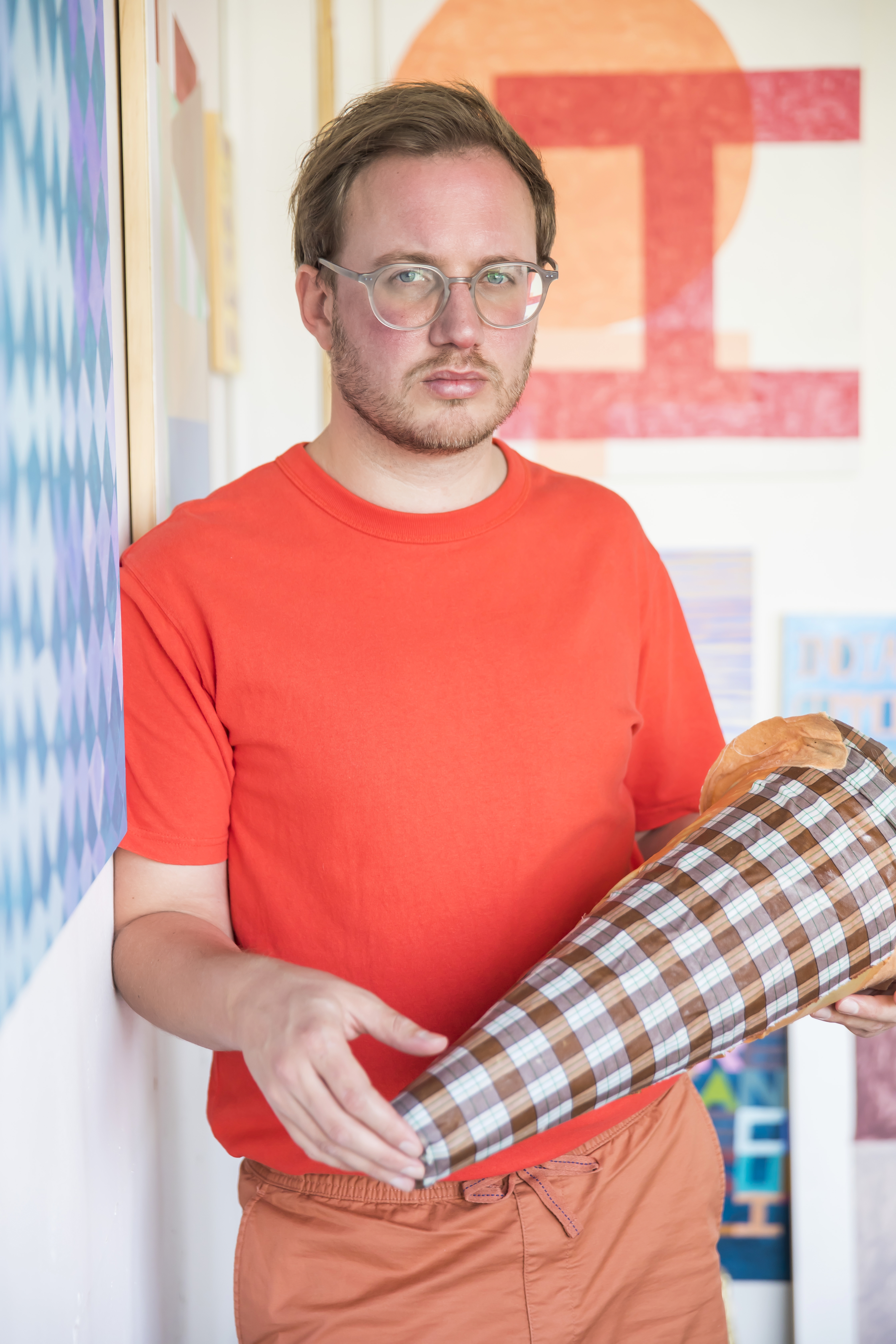 Fernando do Campo is an Argentinean-Australian artist and academic based between Brisbane and Sydney. Do Campo's practice engages the histories of non-human species via anthropomorphism, speculative fiction, autobiography, fieldwork and archival research to produce multi-disciplinary exhibitions and projects. The global south and the legacies of colonialism, nationalism, modernism and migration that hold animal and plant narratives are a focus for his research and material studio explorations.
Do Campo has presented solo exhibitions in Australia and the USA, and group exhibitions internationally. His work is to be found in private and public collections globally, including recent acquisitions into the Australian Parliament House Art Collection and the Queen Victoria Museum & Art Gallery. In 2024, he presented a major solo project with the Rockhampton Museum of Art, and in 2025 he presented a large-scale commission for the Museo MAR (Museo de Arte Contemporanéo Provincial de Buenos Aires), as part of BIENALSUR 2025, the fifth International Biennial of Contemporary Art of the Global South. He is currently in the USA with the support of Creative Australia to present his project The Archive of We, with the Barnett Newman Foundation at the Renee & Chaim Gross Foundation, New York.
Do Campo has received numerous grants and awards, including being a General Sir John Monash Foundation Scholar. He has an MFA from Parsons School of Design, New York and a PhD from Monash University, Melbourne. He was Artist-in-Residence at the State Library of New South Wales 2021-22, and currently Artist-in-Residence at Taronga Zoo Sydney. Do Campo is Senior Lecturer in Fine Art at the School of Art & Design, University of New South Wales.
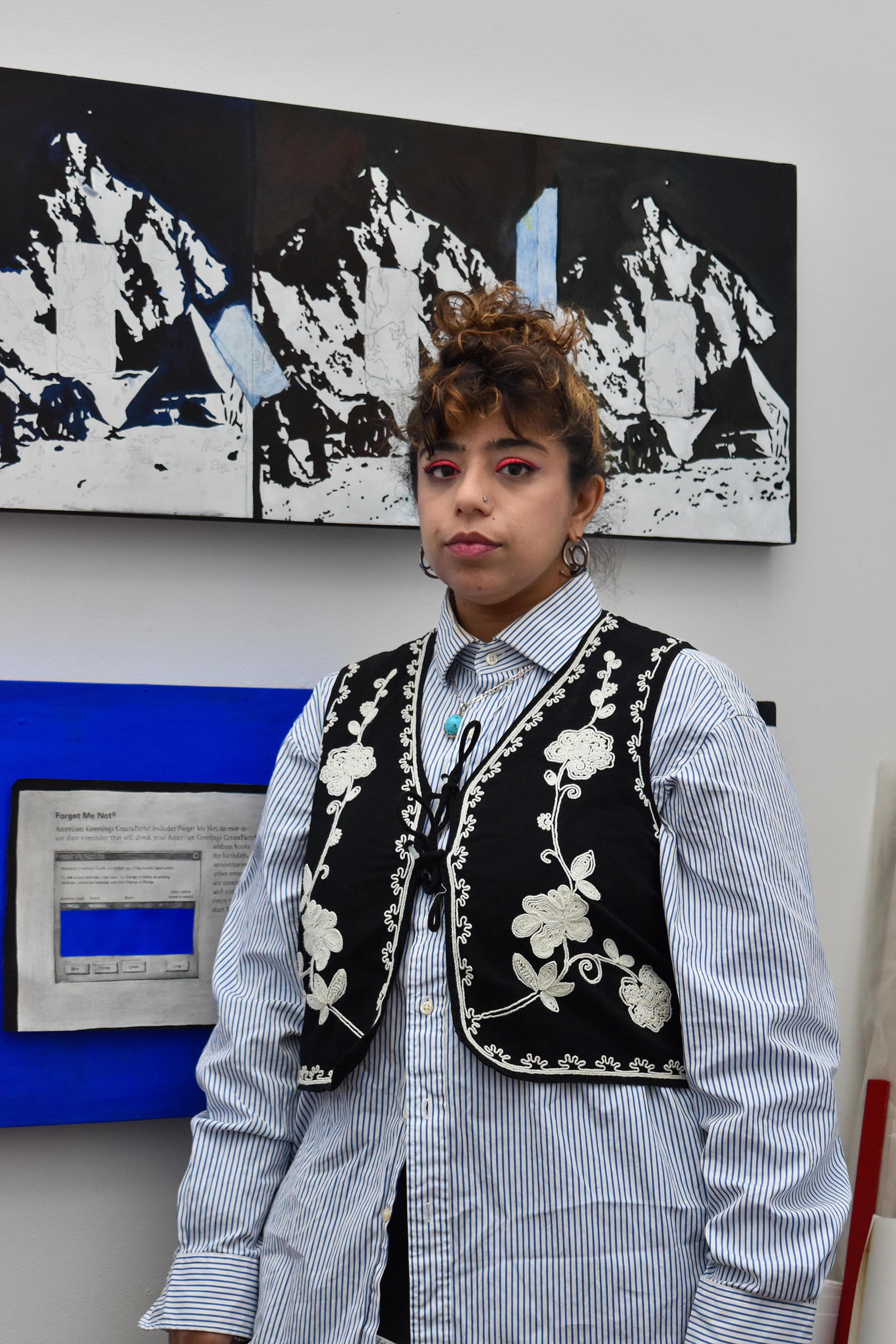 Umber Majeed is a multidisciplinary visual artist and educator. Her writing, performance, and animation work engage with familial archives to explore Pakistani state, urban, and digital infrastructure through a feminist lens. Majeed has presented her work in solo exhibitions at the Queens Museum, Queens, NY (2025); Pioneer Works, Brooklyn, NY (2022); 1708 Gallery, Richmond, Virginia (2021); and the Rubber Factory, New York (2018). Majeed is a recipient of the HWP Fellowship from Ashkal Alwan, Beirut, Lebanon (2017); the Refiguring Feminist Futures Web Residency from Akademie Schloss Solitude & ZKM, Germany (2018); the Digital Earth Fellowship from Hivos, the Netherlands (2018-19); the Technology Residency from Pioneer Works, Brooklyn, NY (2020); the QM-Jerome Fellowship (2024); and the ISCP Pollock-Krasner Fellowship (2025). Majeed is currently a Y12 NEW INC member- Extended Realities Track.
Center for Brooklyn History programs are made possible in part by the New York State Legislature and the Office of the Governor.