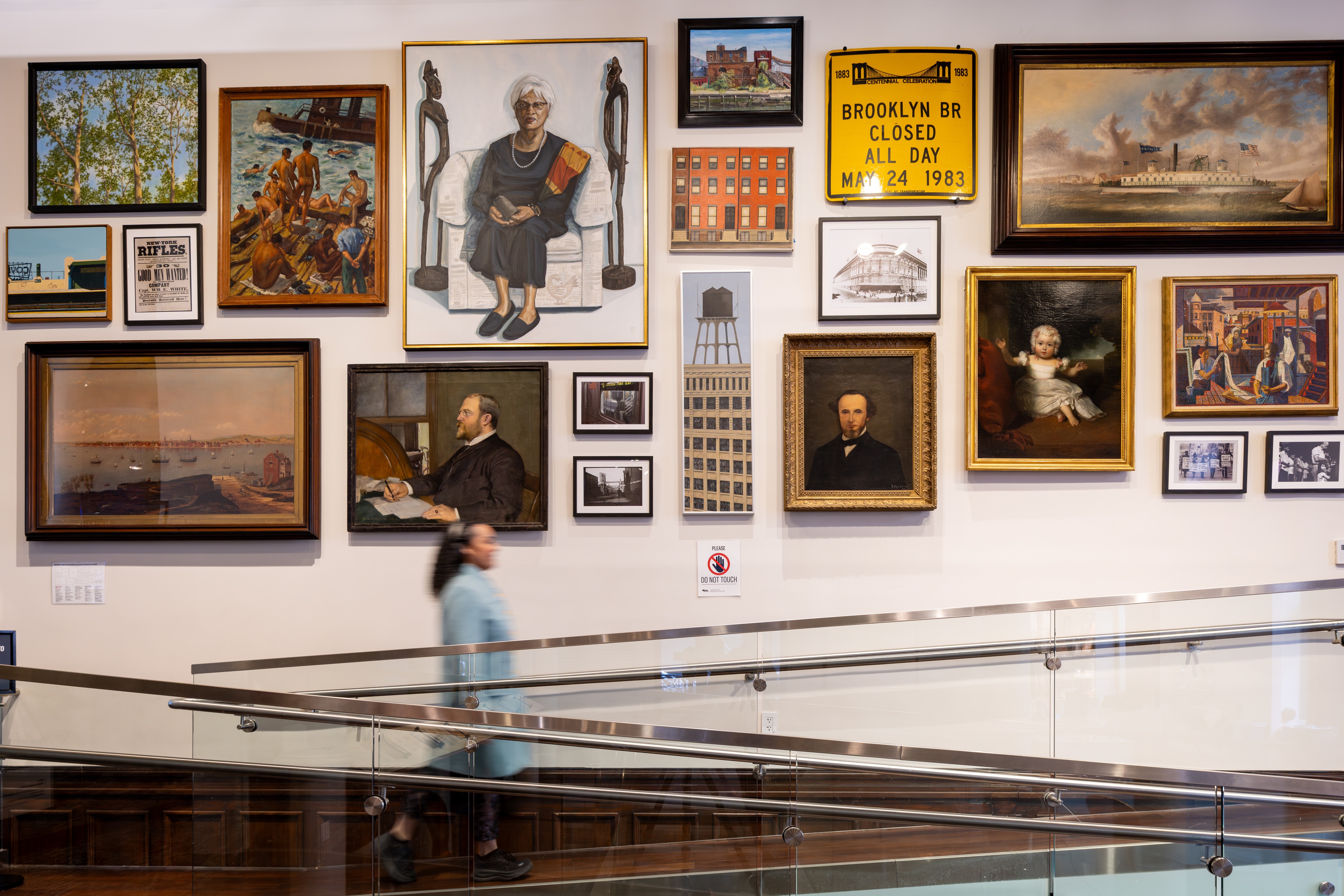
There are three things you'll see immediately when you walk through the front doors of CBH: our friendly Visitor Services team; the Shop with its Brooklyn-inspired gifts; and the wall above the access ramp leading to the Othmer Library.
It's a large wall that's undergone a big revamp as it's now home to 20 framed works from the collection. We call it the Salon Wall since it's hung salon-style, with the pieces tightly packed and having a variety of subjects, sizes, and frame styles. The idea was to give visitors a glimpse of what can be found in the collections–from photographs, to portraits, to cityscapes, to documents. Some of them are new to the collection, while others have been at Pierrepont Street since the 1890s.
Since visual impact and variety were the priorities for the Salon Wall, there isn't an overarching narrative that connects each work like you'd find in a more linear exhibition; however, each piece has its own Brooklyn story. With that in mind, this Brooklynology post has a short text for each of the works on display so they can be more thoroughly enjoyed whether at home or at CBH.
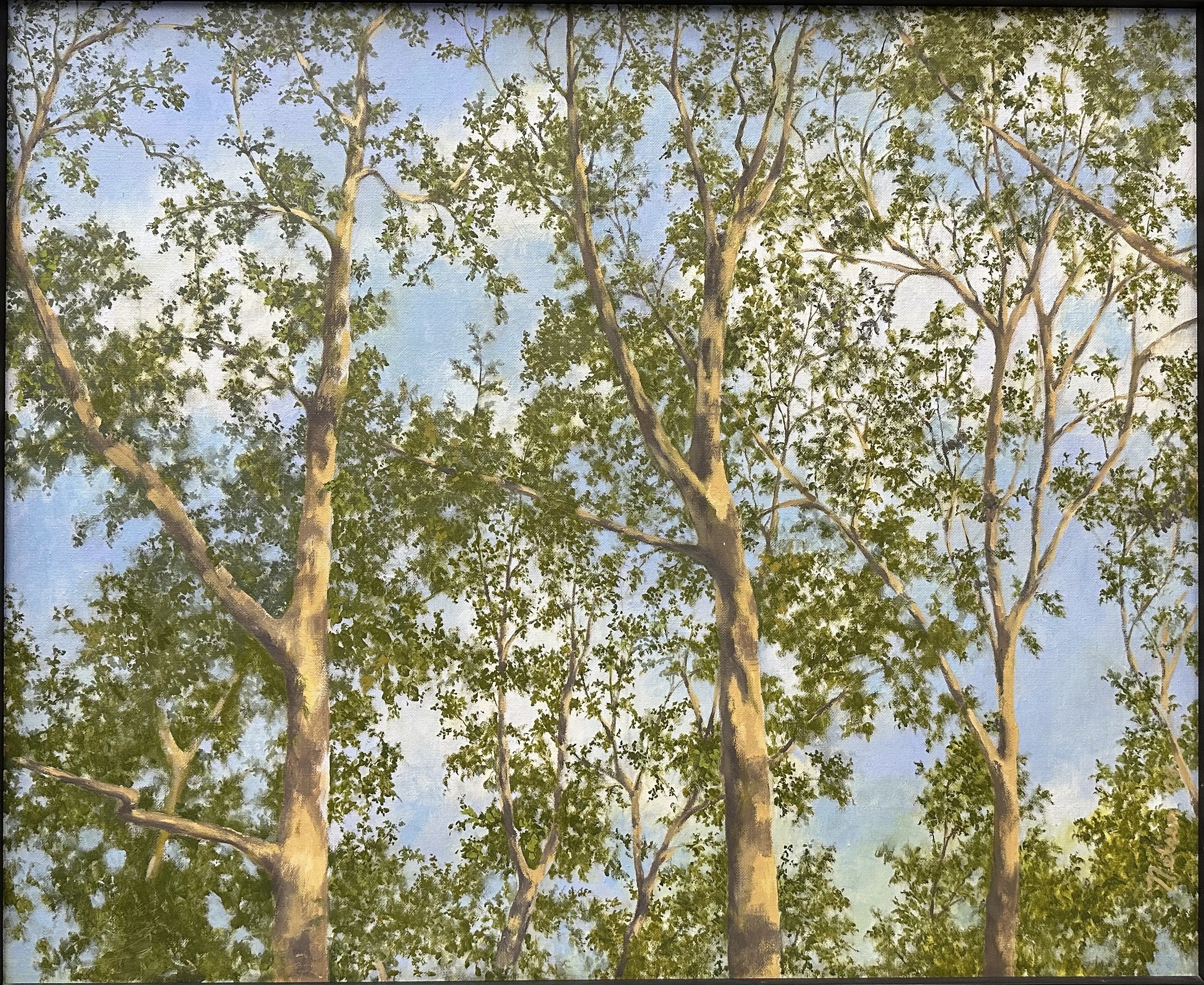
Cadman Plaza is one of the public parks and plazas that extend from the terminus of the Brooklyn Bridge to Borough Hall. Named in 1939 for Bedford-Stuyvesant preacher Reverend Dr. Samuel Parkes Cadman (1864–1936), the Plaza would be a locus for Downtown Brooklyn urban renewal from its conception in 1936 through the 1960s. Expanded as one of Park Commissioner Robert Moses’s (1888–1981) "slum clearance” projects of the 1950s, the razing of 300 residential and commercial buildings, and the displacement of 1,200 Brooklynites, was the price for increased parkland and improved car traffic through the city. The formal rows of London plane trees depicted in this painting are one of the defining features of the park.
Though we could take the short walk from CBH to Cadman Plaza and see the same trees today, the second part of this painting’s title ties it to a specific moment; artist Donald Nelsen (b. 1928) recalls the sunny weather of September 11, 2001, when an ordinary day turned to extraordinary tragedy and violence.
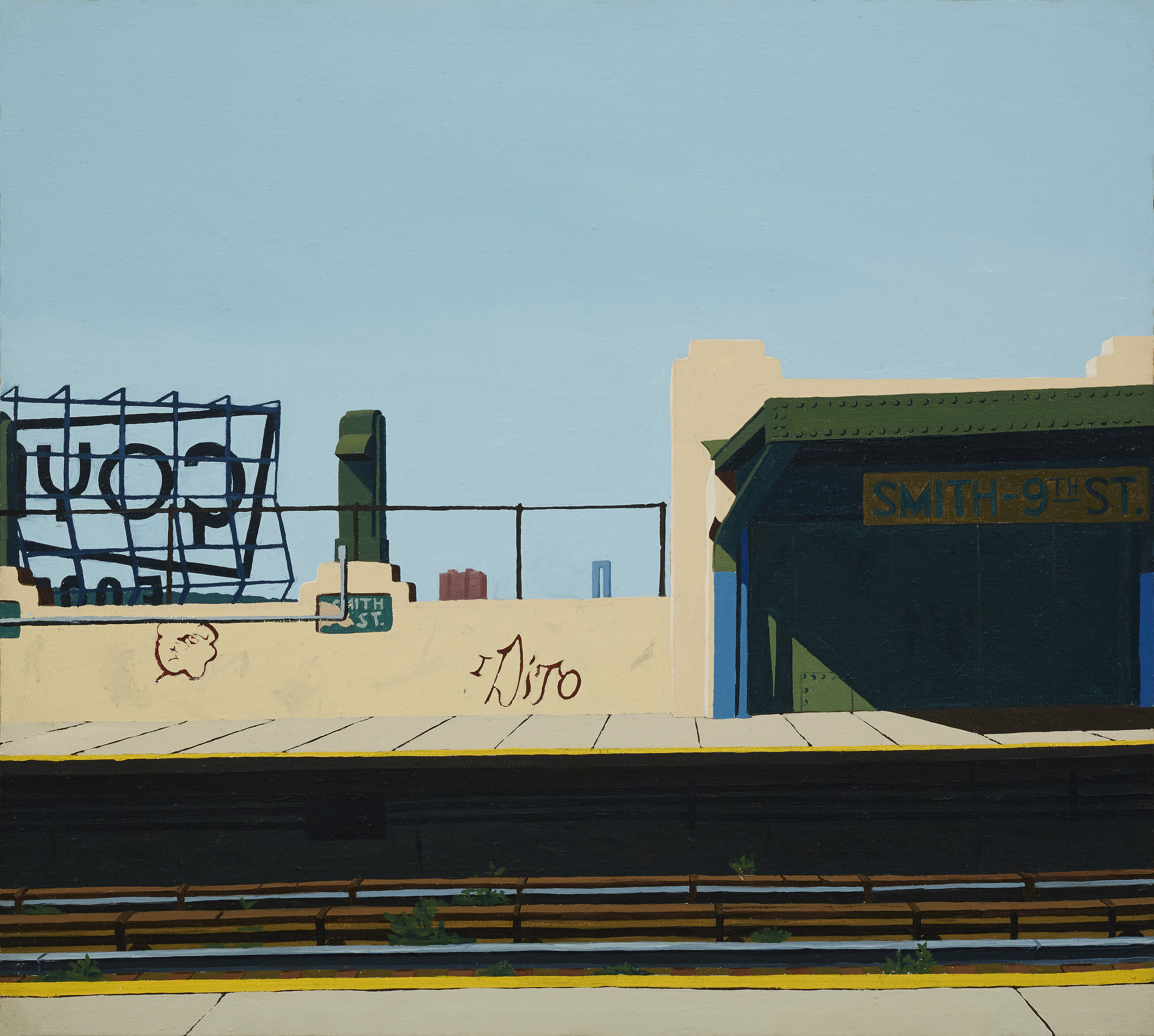
The Smith–Ninth Streets subway station, an elevated stop over the Gowanus Canal, originally opened in 1933 for the new Independent Subway System (IND.) The IND would join the Interborough Rapid Transit Company (IRT) and Brooklyn–Manhattan Transit Corporation (BMT) train networks in 1940 to form the integrated New York City subway.
It was the art deco architecture of the station, and the interplay of light and shadow on the familiar structure, that inspired Ken Rush (b. 1948) to paint this work in 1974. Describing the painting 45 years after completion, Rush stated: The scene is a view from the northbound platform looking south. On the left is the back of the famous Goya sign, which was demolished, I believe, around 1990. In the far distance is one of the towers of the Verrazano bridge. The graffiti tag, “Dito” replicates what was actually there. I recall I did this painting in summer light, shortly before noon.
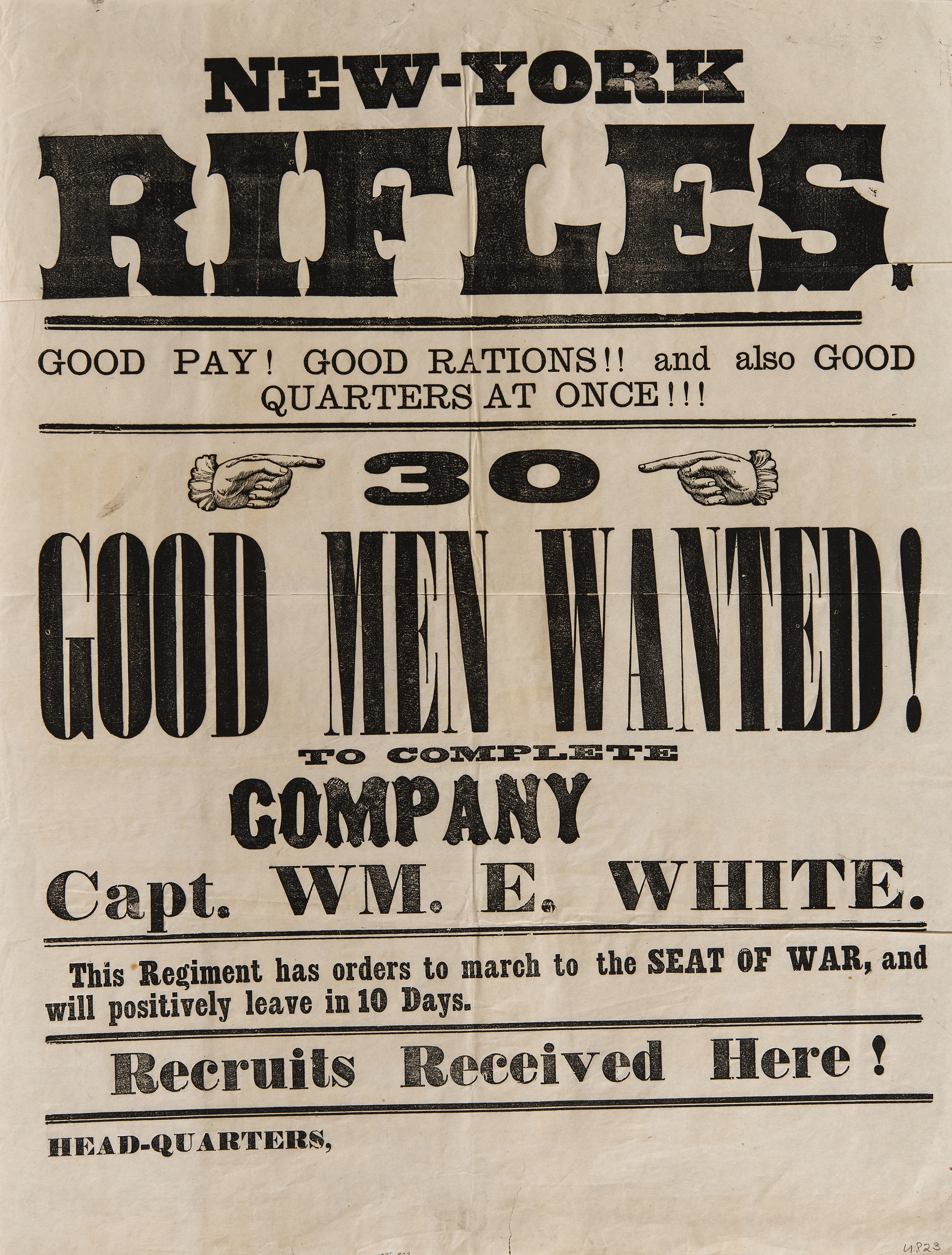
Not everything on the Salon Wall was intended to be viewed as artwork. This Civil War era broadside was hastily made, with the lines of text subtly out of alignment with the edges of the paper. Broadsides, which would be posted in public to quickly disseminate information or to advertise, were designed to be eye-catching and inexpensive to print. Since they were meant to be used for only a short time, broadsides and other ephemera are valuable snapshots of the concerns, beliefs, and activities of everyday Brooklynites.
New-York Rifles... is one of several Civil War recruitment posters in the CBH collection. The areas that now make up Greater New York City raised over 150,000 volunteers to fight for the Union. Many of them, and of the thousands more drafted after the 1863 Conscription Act, wouldn’t make it home. Roughly 100,000 would be killed in action or die of disease during the war. In Brooklyn, more than 8,000 fallen soldiers and veterans are now buried at Green-Wood Cemetery alone.
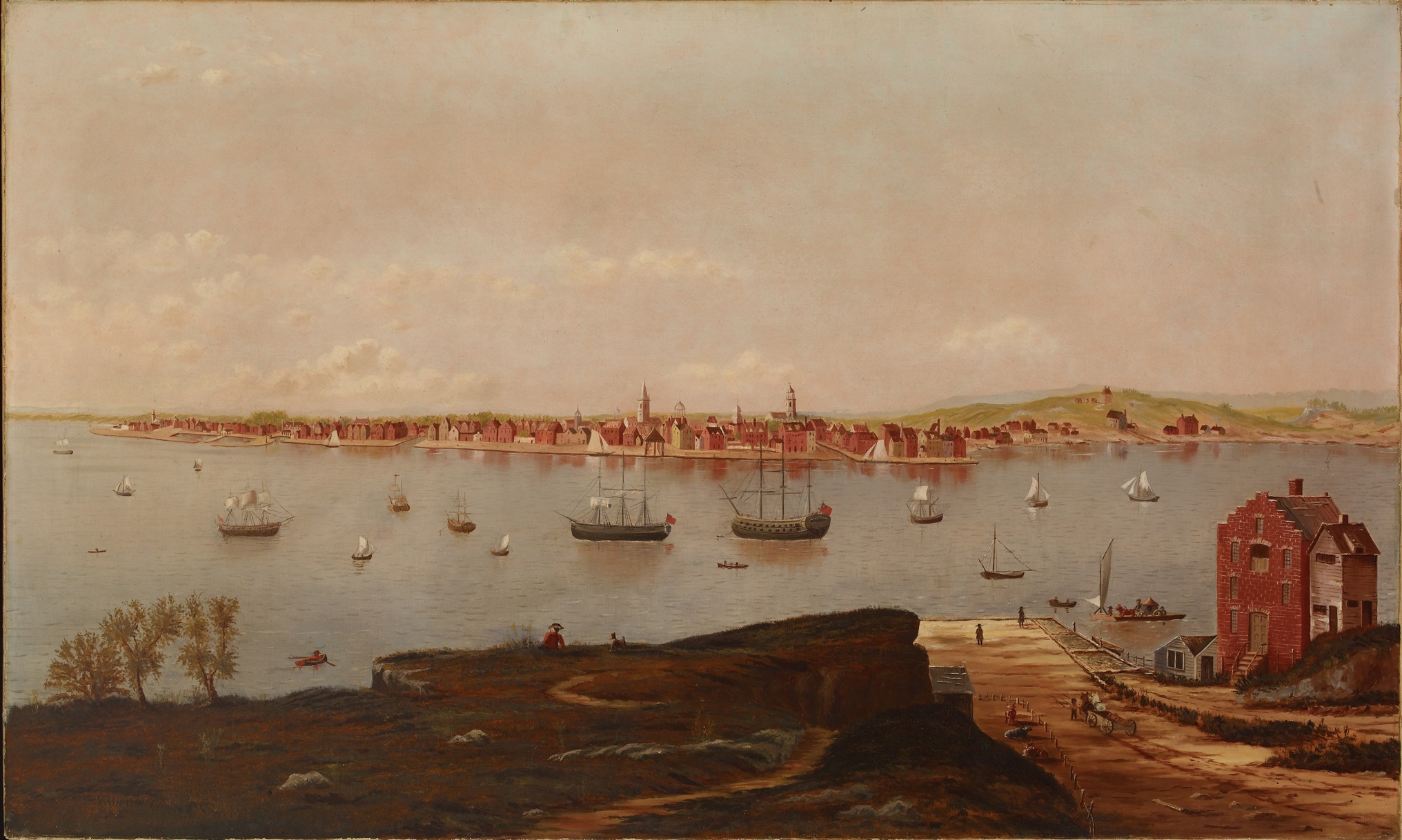
As the low brick buildings and wooden sailing ships suggest, this painting depicts New York from the Brooklyn side of the East River in the 18th century. Based on a 1746 engraving by Thomas Bakewell, itself a reissue of a 1717 engraving by William Burgis, this painting was exhibited in the 1872 Brooklyn Art Association show before coming into the possession of the Union Ferry Company of Brooklyn.
One of the interesting details that was also present in Burgis's original engraving is the three wooden boxes filled with rough earth just to the left of the brick ferry house. This is 18th century landfilling, a process that would transform Brooklyn's natural shoreline to better serve shipping and waterfront industries. Another detail is the paddock of cattle (also on the ferry approach), which is illustrative of the the main economic activity of colonial Brooklyn: agriculture. Farms would be an important part of Brooklyn's economy throughout the 19th century, with Kings County being one of the nation’s leading vegetable producers as late as 1880. The Brooklyn Eagle reported on Brooklyn’s “last farmer” in 1949, after the majority of farmland had been developed into residential neighborhoods.
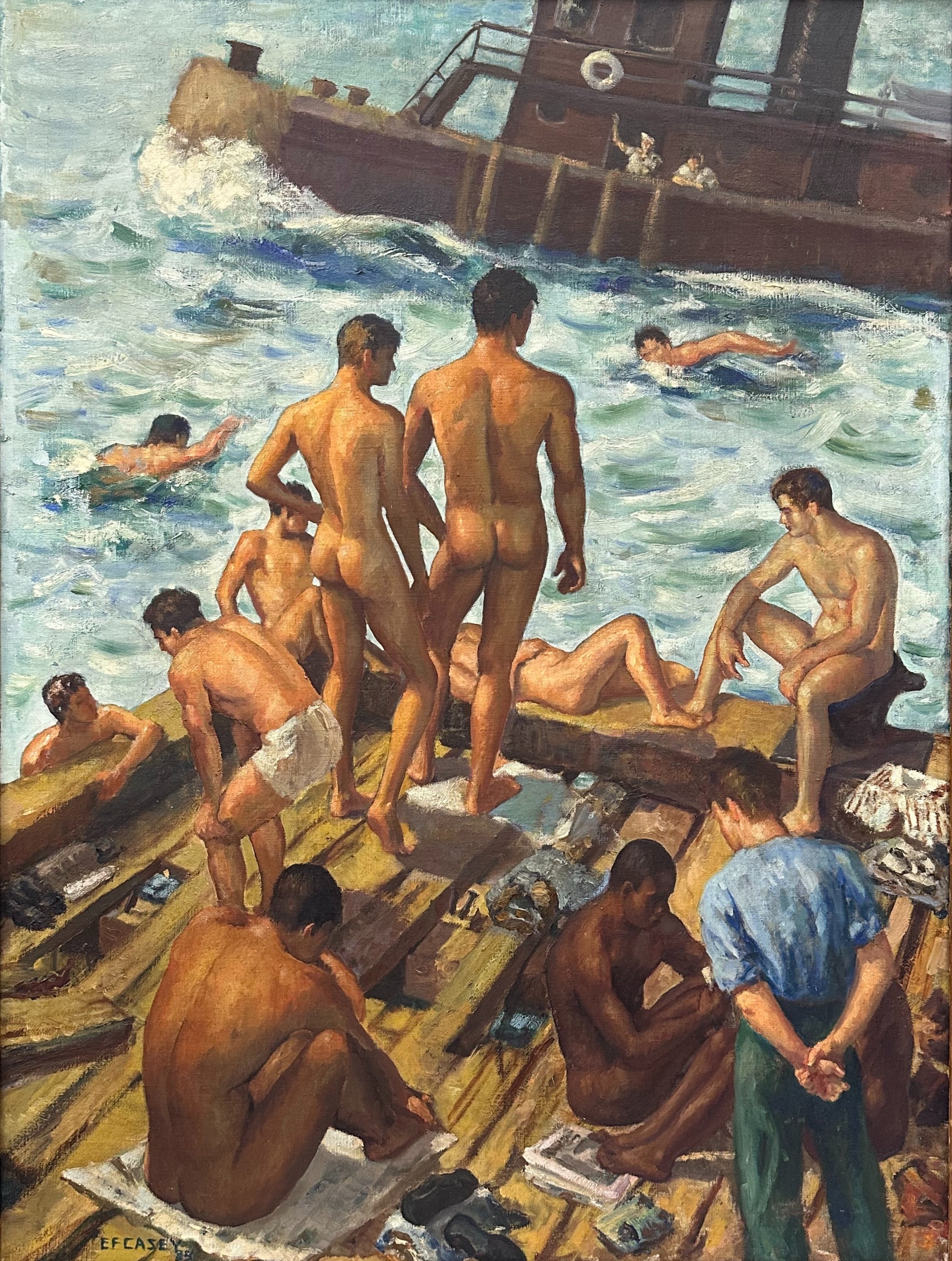
Swimming the East River was not uncommon in the 1930s, even though environmental degradation by sewage runoff, industrial waste, and heavy ship traffic was already a known issue by the late 19th century. For the thousands of waterfront workers who manually unloaded and loaded the cargo that flowed through the port of New York in the decades before shipping containers, a chance to cool off in the water may have been hard to resist.
Last exhibited as part of On the (Queer) Waterfront in 2019, The Race illustrates how the working waterfront of Brooklyn was not just a site of manual labor, but also of cross-cultural socialization on the periphery of more conventional New York society. In bright sunlight, dockworkers relax and swim in the East River off Brooklyn Heights: a subject Brooklyn Heights painter Edward F. Casey (1897–1957) would also depict in another work now in the Green-Wood Historic Fund Collections.
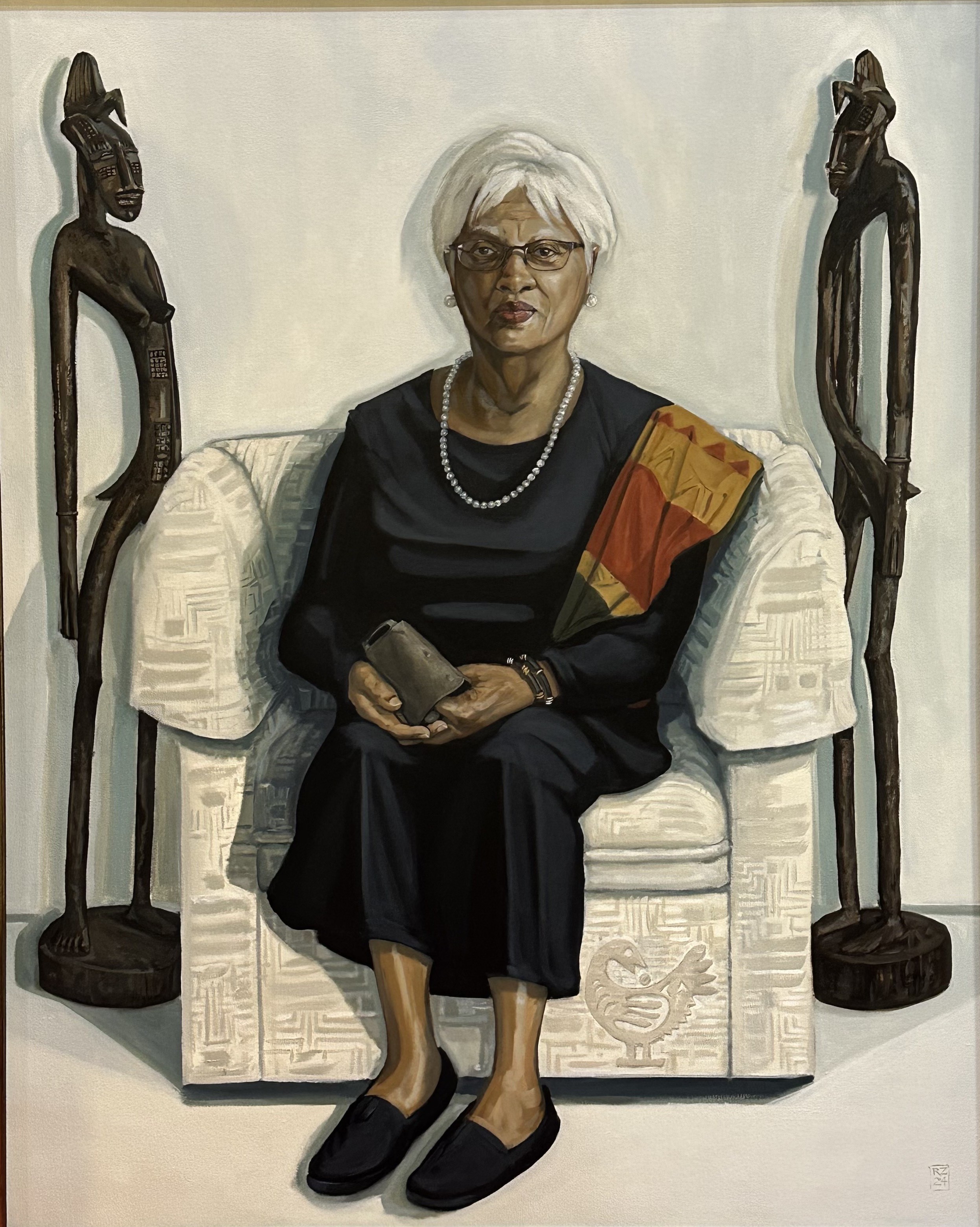
Mildred E. Jones was commissioned by CBH from artist Rusty Zimmerman (b. 1973) for the 2025 exhibition Trace/s: Family History Research and the Legacy of Slavery in Brooklyn. The exhibit examined the often-overlooked history of slavery in Brooklyn, as well as celebrated the work of Black genealogy researchers who dedicate themselves to researching the past and enriching our understanding of the present.
Mildred, who was born in Bedford-Stuyvesant in 1937, was asked to be the sitter through contacts with the New York chapter of Afro-American Historical and Genealogical Society (AAHGS NY). Mildred's brother, Augustus “Gus” Harris had traced their family history to their great-great-grandfather Samuel Anderson (1813–1903), who had been born into slavery in Flatbush on Jeremiah Lott's farm. According to family lore, the cowbell Mildred holds was passed down from Anderson. It punctuates a thought Mildred shared about her family’s Brooklyn history while having her portrait painted: These are my roots. This is where I’m from. This is who we are. We’ve been here a long time.
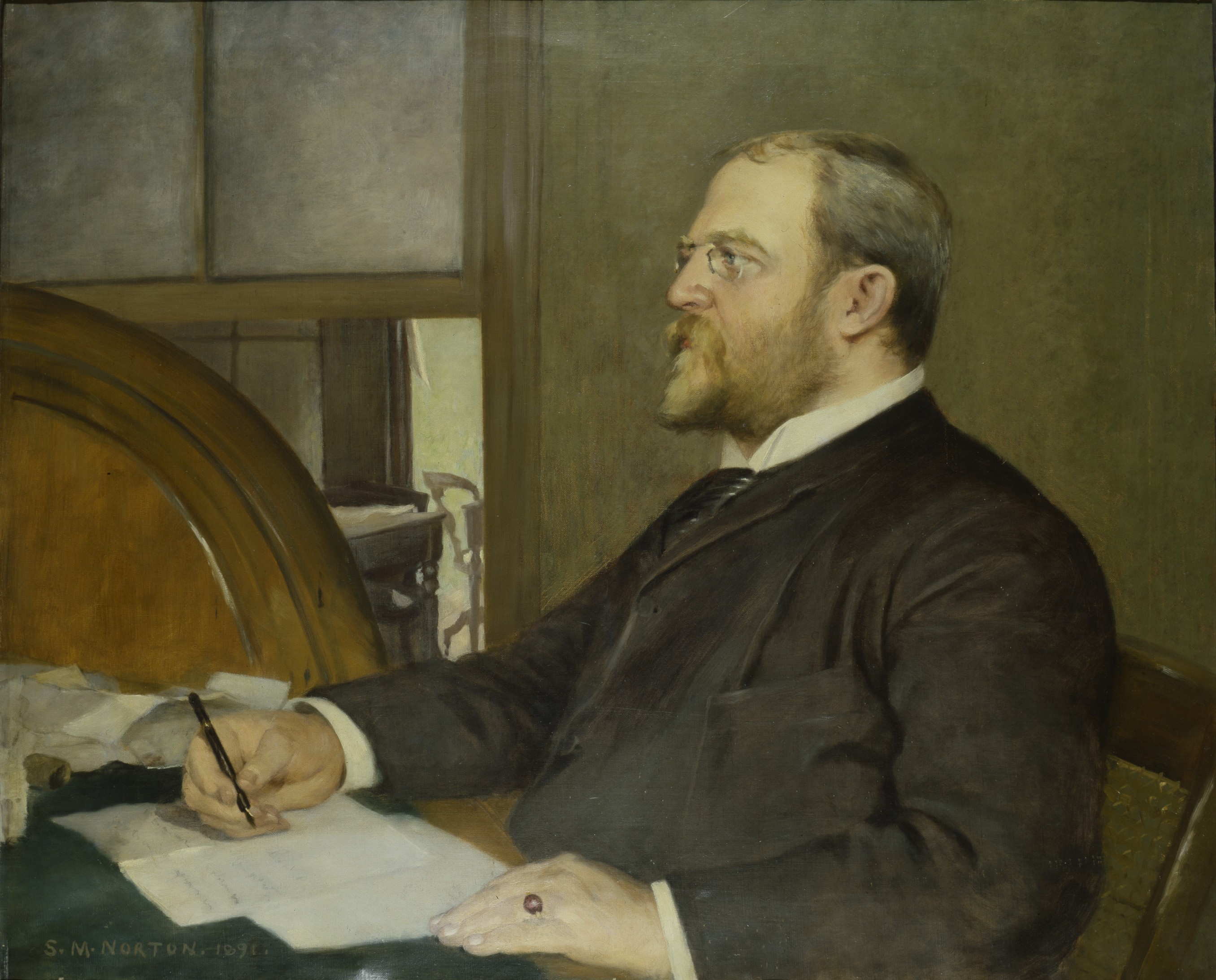
In several ways, this painting of Dr. J.M. Van Cott, Jr. (1861–1940) is entirely typical of oil portraits in the CBH collection: it is a 19th century work, with a single sitter who is a Brooklyn professional from a prominent family. In Van Cott’s case, he was first a banker before studying medicine at Long Island College Hospital. He would graduate in 1885 and later become head of their Pathology Department. His father, Judge J.M. Van Cott, Sr. (1815–1896) was an early officer of the Long Island Historical Society (one of the predecessor institutions to CBH) who had a hand in drafting the Society’s charter in 1863. It is likely this connection that led to the portrait joining the LIHS collection.
Sitter aside, Dr. Joshua Marsden Van Cott, Jr., is a rare example of a portrait by a 19th century professional woman painter at CBH. New York artist Susan Mary Norton (1858–1922) is relatively little-known, but we can glean some information from contemporary newspaper coverage. Along with portraits, Norton was noted for her New York City views, and paintings of harbor vessels and steam locomotives.
A more surface-level distinction for Van Cott is that it is the only oil portrait at CBH with a horizontal orientation. Norton used this composition in another one of her works, The Engineer, which was reproduced in The Inland Printer magazine in April 1901.
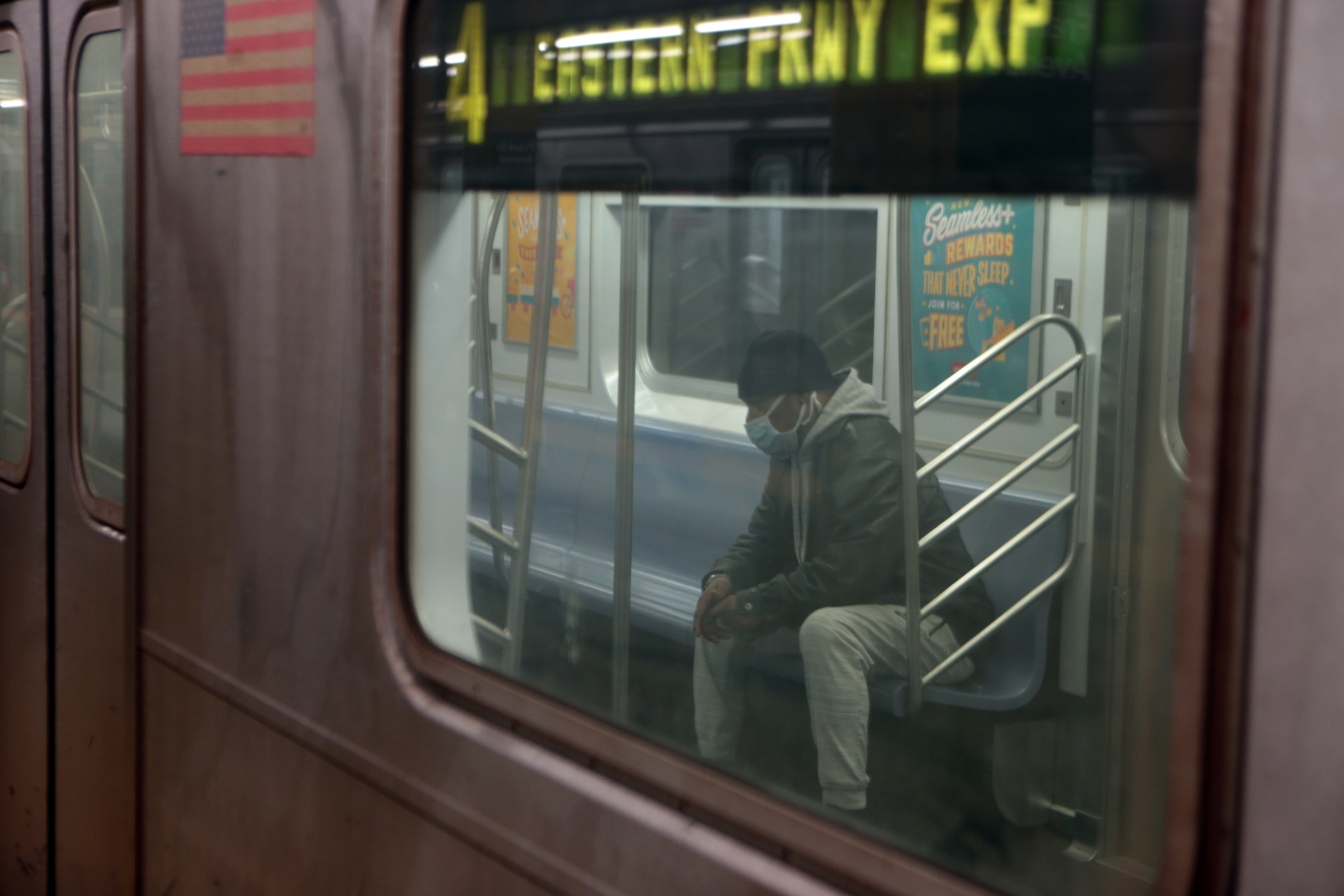
Lifelong Brooklyn resident Terrence Jennings (b. 1970) is an independent photographer and photojournalist who has been documenting world-historical events and the spectrum of everyday life since 2000. His images have appeared in magazines such as Rolling Stone, Uptown, Trace, Hip Hop Weekly, People, The Source, and several others. Jennings describes his practice as having “...a lean towards emphasizing social justice photographic coverage of what matters most, our right to control the narratives that determine our collective futures.”
View from Subway Platform is one of a series of photographs Jennings took in the Lefferts Gardens and East Flatbush sections of Brooklyn during the Covid-19 pandemic, from March to May 2020. The first case of Covid-19 in New York State was announced by Governor Cuomo on March 3rd. By early May, a survey conducted by the CDC found that 42% of 286 respondents residing in the New York City metropolitan area knew someone who had tested positive for COVID-19, and 23% knew someone who had died. The image captures the isolation of spring 2020, when stay-at-home orders and nonessential business closures were used to slow the spread of the virus. Not only is the man in the train car alone, but we are removed as viewers, seeing him through the subway car windows.
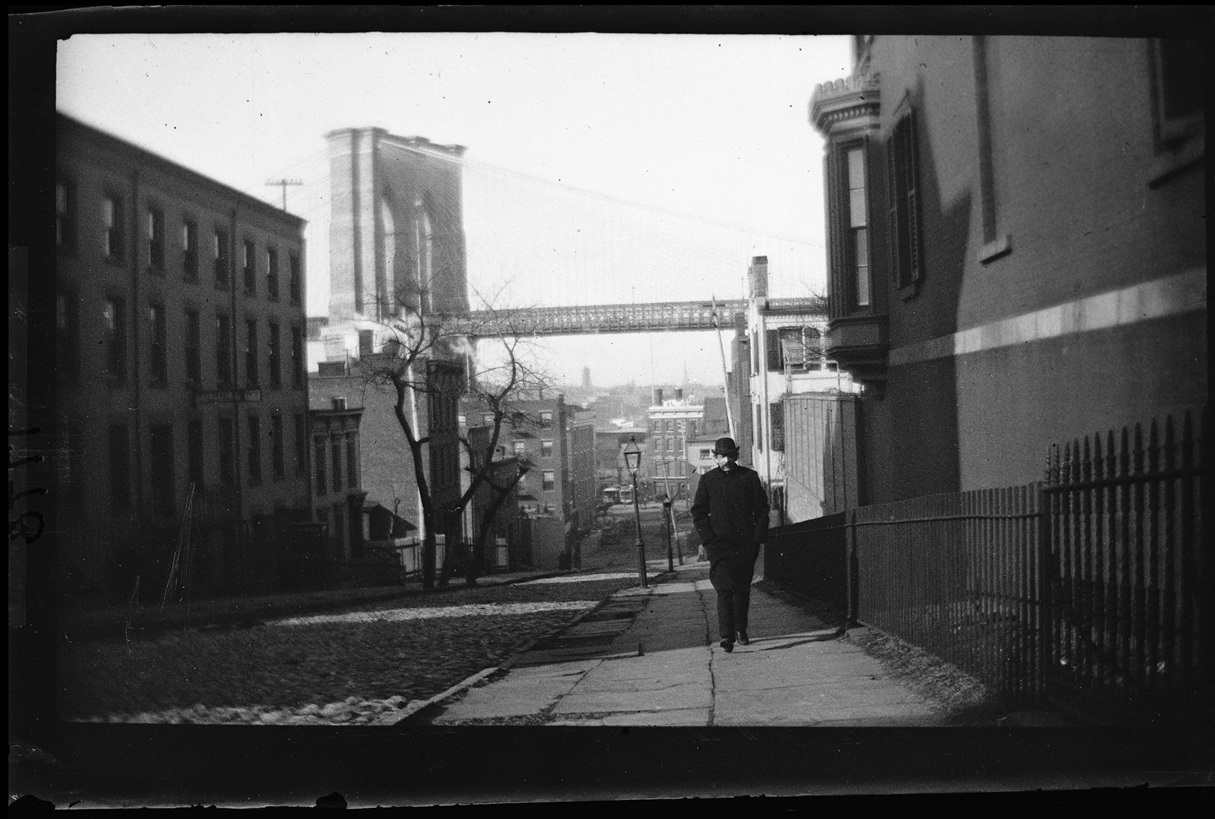
Another example of street photography is this 19th-century work by George Bradford Brainerd (1847–1887). A man walks on the sidewalk towards the viewer, away from old Fulton Street, with the Brooklyn Bridge in the background. Brainerd, an amateur photographer from the age of 13, was a pioneer in the medium, developing his own techniques and even making his own cameras throughout his life. His views of Brooklyn often follow his work as the City’s Deputy Water Purveyor, but his subjects include local landmarks (many no longer extant), Brooklynites recreating at the beach or in the park, and street laborers such as ragpickers and soap fat collectors.
In 1887, Mrs. Brainerd gave 400 of her deceased husband's glass plate negatives to the Brooklyn Academy of Photography, which became part of the Brooklyn Institute of Arts & Sciences (the Brooklyn Museum) in 1889. Another large cache of Brainerd negatives were discovered by an unknown individual in an empty house on Gates Avenue at some point prior to 1919. Today, the George Bradford Brainerd photograph collection is jointly stewarded by the Brooklyn Museum and CBH collections.
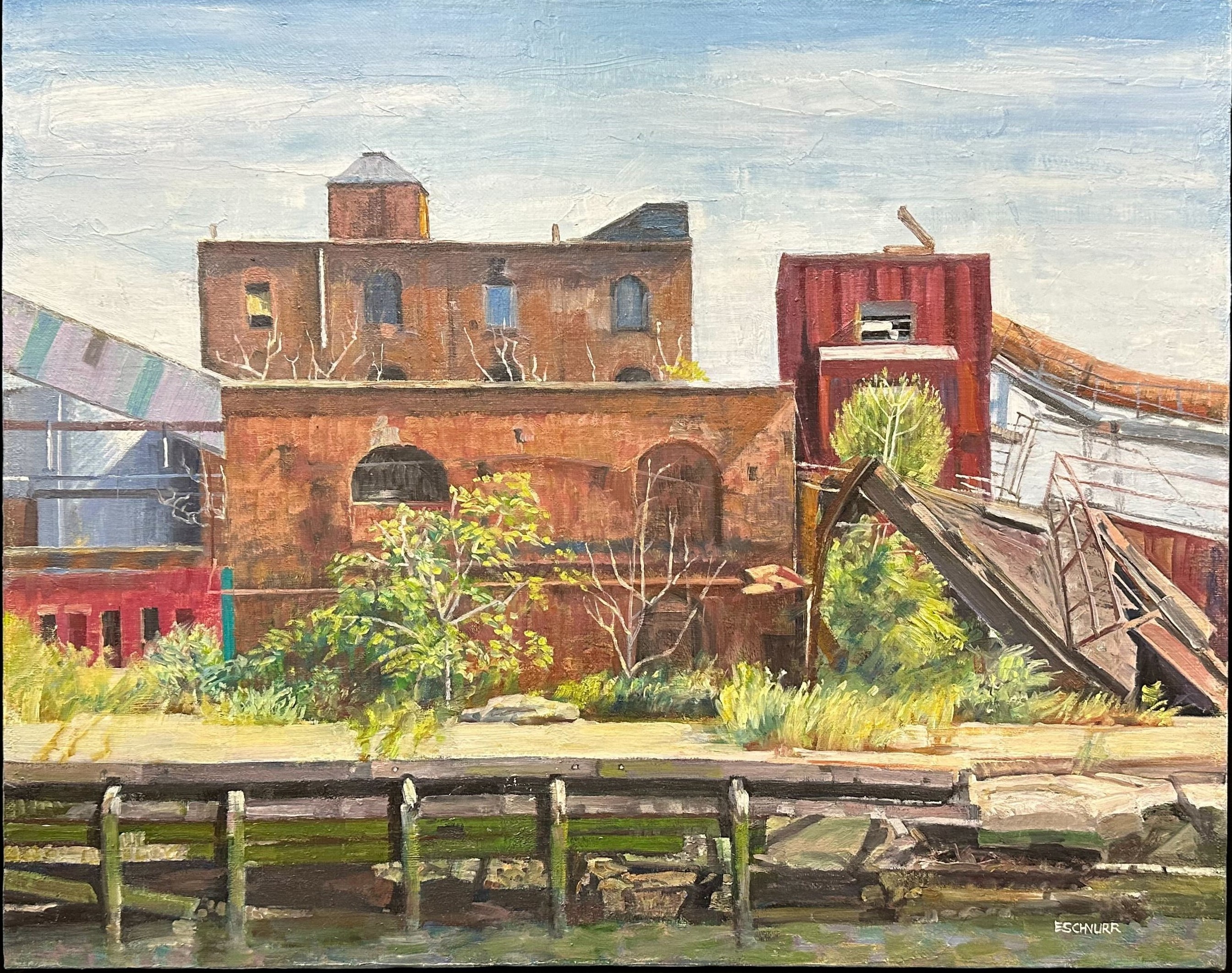
Red Hook Wharf presents a derelict pier at the end of Richards Street as a romantic industrial ruin; a remainder and a reminder of Erie Basin as an active port. Though the Atlantic Basin ferry stop, the Red Hook Marine Terminal, and the Waterfront Museum are all examples of the neighborhood's continued waterfront dynamism, the days when Red Hook was a veritable “sailor town” have passed. The brick pier building in Red Hook Wharf, which had last been in operation in 1985 as part of the Revere Sugar Factory, was demolished shortly after it was painted in 2005.
Brooklyn artist Elinore Schnurr (b. 1932) has long found continual inspiration in Brooklyn’s urban spaces. She is also the niece of artist Edward F. Casey whose work The Race is also on the Salon Wall. This is the only known example of two related artists in the display, but considering CBH is a resource for original genealogical research, I don’t want to say definitively.
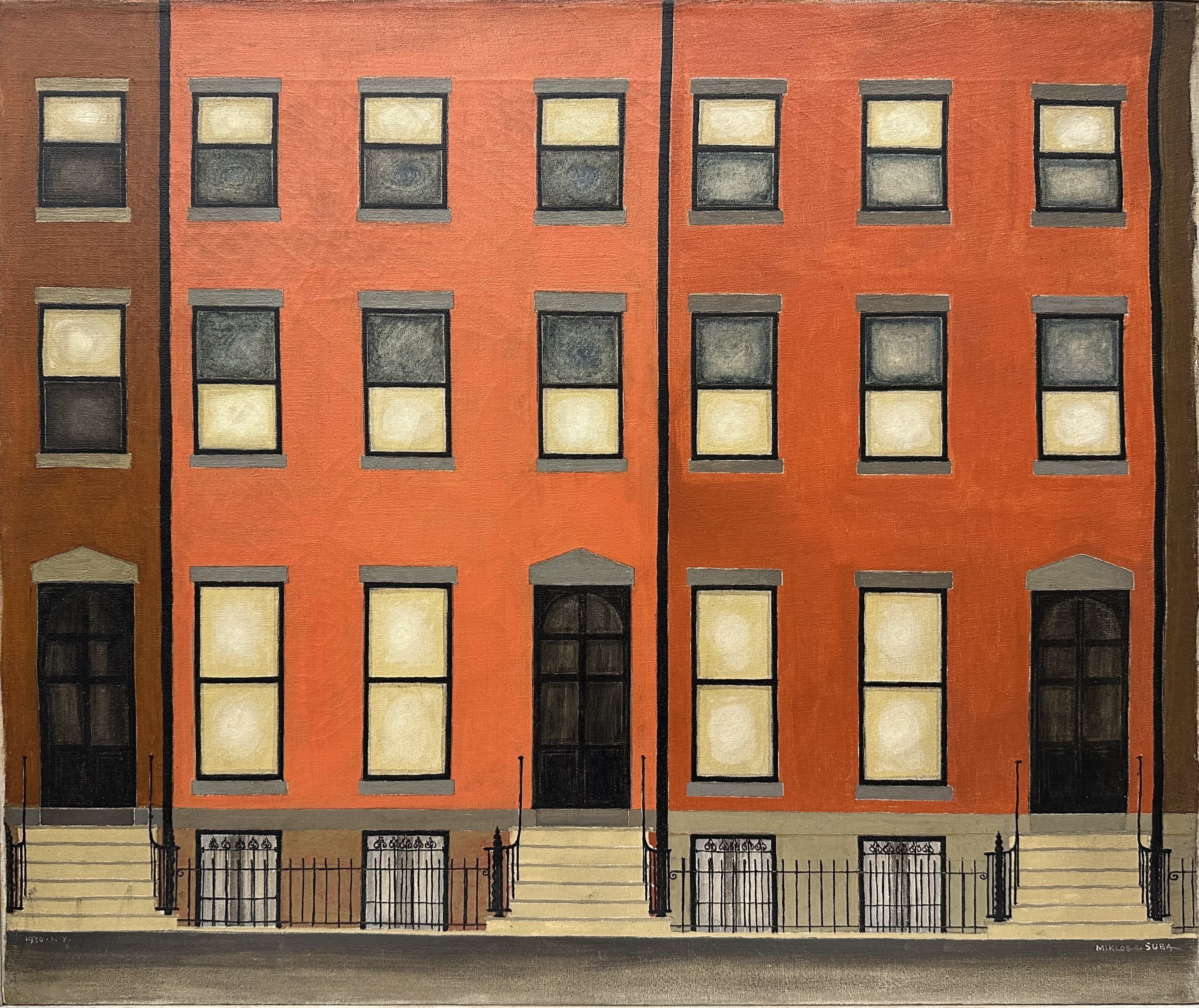
Miklos Suba’s (1880–1944) boldly modernist treatment of Brooklyn row houses in Portrait of Joralemon Street is an example of the Precisionism—an informal art movement that flourished in the United States during the 1920s and 1930s. Defined by reduced compositions that focused on their underlying geometry, common subjects included urban and industrial infrastructure. At a time when the city was rapidly developing, a Brooklyn artist looking for factories, warehouses, and modern modes of transportation were spoiled for inspiration.
Immigrating to the United States in 1924, Suba was a Hungarian architect who spent the last two decades of his life in Brooklyn exploring the built environment of his adopted home in paintings and drawings. Though Suba would depict Machine Age factories and waterfront infrastructure, he would also turn his eye to Brooklyn’s earlier 19th century buildings like the ca. 1840s brick houses of Joralemon Street. Of particular interest to Suba were Brooklyn's barbershops and colorfully-striped barber poles.
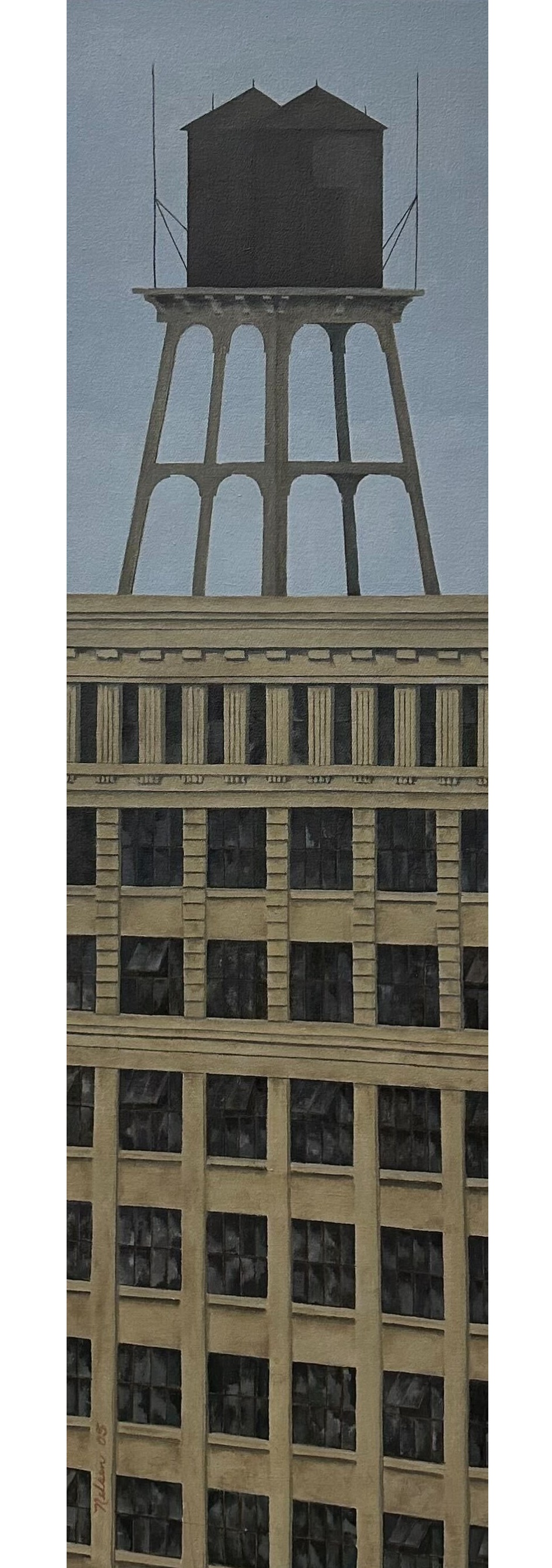
The extreme vertical orientation of Water Tanks in Dumbo made it a challenge to immediately identify the building depicted. There are no other buildings, skyline, or streetscape to distract the viewer from the building’s industrial pivot windows or the elements of the neo-classical cornice. This also means there were no clues aside from the title telling us that this is in the Dumbo (Down Under the Manhattan Bridge Overpass) neighborhood.
By searching the digitized CBH photograph collections for the distinct architectural details recorded by painter Donald Nelsen, I was able to identify this as 70 Washington Street. Built in 1911, it was one of the warehouses built by Robert Gair (1839–1927) who invented the pre-made paper carton. 70 Washington Street is only one of the buildings built by the Gair Company; the neighborhood was even nicknamed “Gairville” in the early 20th century due to the business’s multi-block presence. The neighborhood would be one of several along the New York waterfront that were transformed from industrial hubs to artist enclaves to prized residential real estate through the 20th century. In 2005 (the same year Nelsen painted this view) 70 Washington was converted into condominiums.
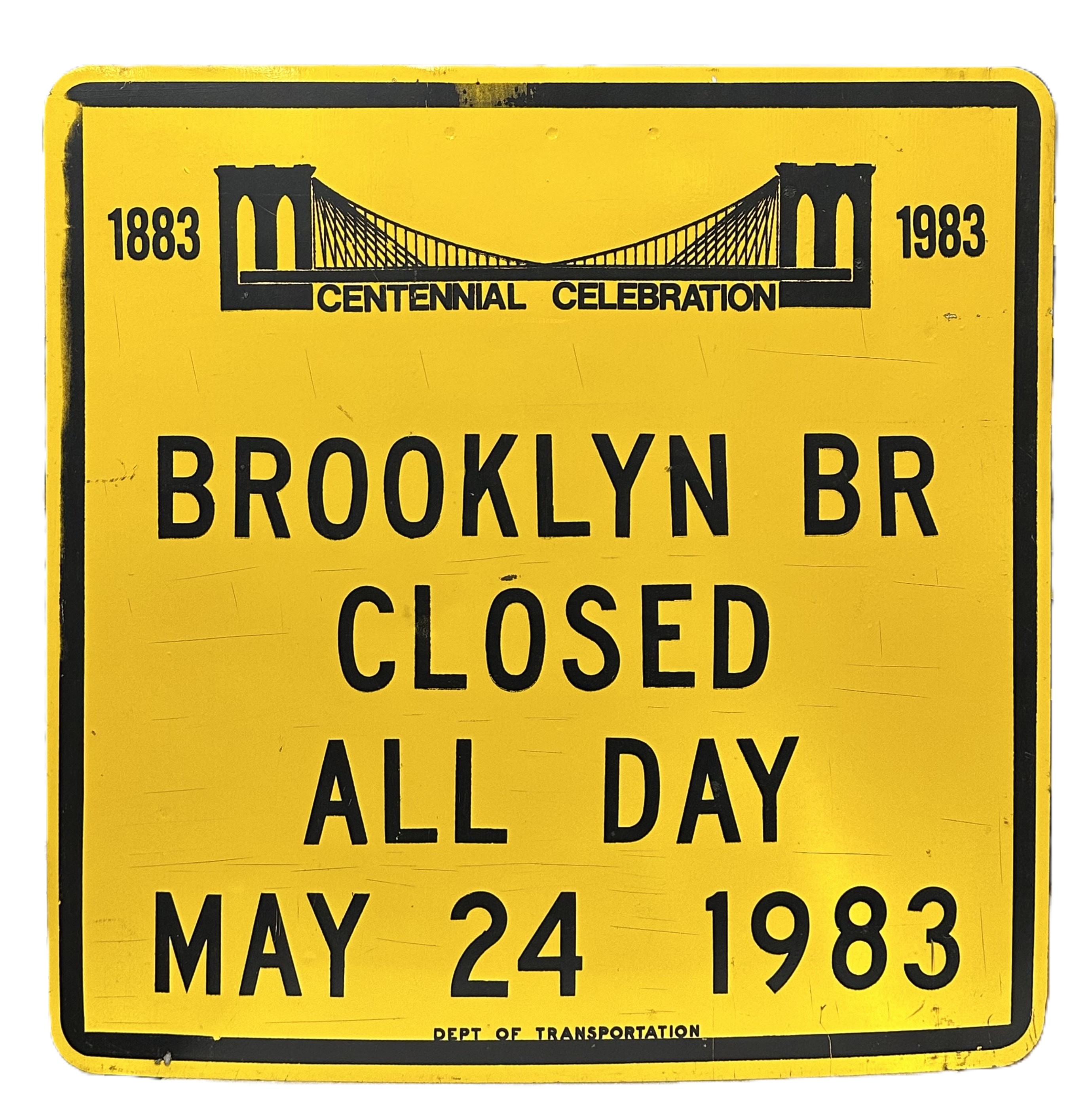
The Brooklyn Bridge Centennial of May 24, 1983, may have been the biggest party ever thrown by Brooklyn and Manhattan. 18,000 marchers would cross the Bridge in the morning, which was shut down to vehicular traffic, and tens of thousands more would watch the spectacular fireworks show that night which the involved 14 tons of explosives. The anniversary spurred enough journalism, promotion, and historical writings about the Bridge to be the basis for a Brooklyn Bridge centennial celebration collection in the CBH archives.
Thanks to being painted “high visibility” yellow, this traffic sign from the Brooklyn Bridge Centennial is legible even when hung 13 feet high on the Salon Wall. It’s also the only item on the Wall that comes from CBH’s extensive collection of Brooklyn-related artifacts.
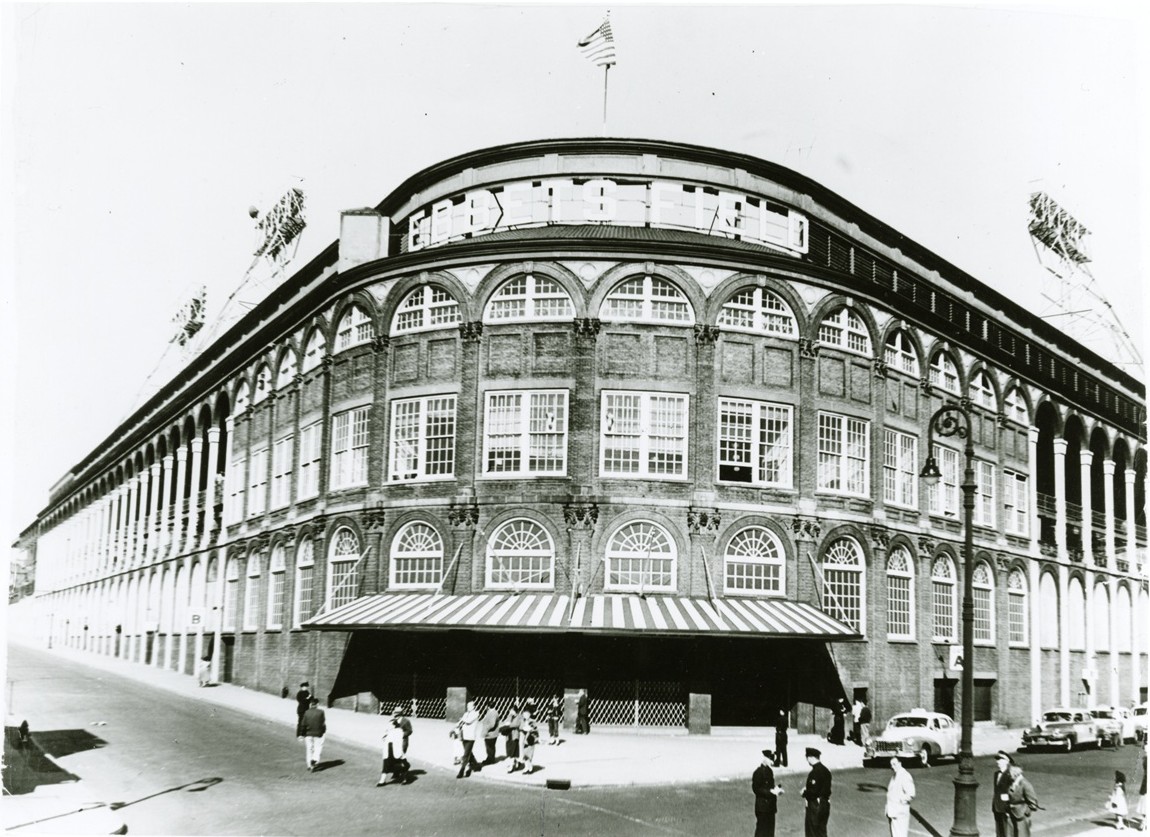
This photograph depicts Ebbets Field, the Flatbush baseball stadium that was the home of the Brooklyn Dodgers from 1913 onwards. The Brooklyn Dodgers weren’t just Brooklyn’s baseball team; they were an institution. Founded in 1883, the team went through numerous names including the Bridegrooms, the Superbas, the Robins, and the Trolley Dodgers—a moniker supposedly based on Brooklynites' ability to dodge the borough’s many streetcars. Though the Dodgers would play in the World Series a total of nine times, they would win the Series only once in 1955. The names of famous Dodgers are too many to list, and include Jackie Robinson (1919–1972), Sandy Koufax (b. 1935) and Pee Wee Reese (1918–1999.)
Dodger’s fans were nearly as renowned as the team itself, known for their antics and loyalty. Fans like “Howlin'” Hilda Chester (1897–1978) and the Dodgers Sym-Phony Band would become celebrities in their own right. Though the Brooklyn Dodgers became the Los Angeles Dodgers in 1958, and Ebbets Field would be demolished in 1960, the memory of Brooklyn’s baseball team is still dear to many.
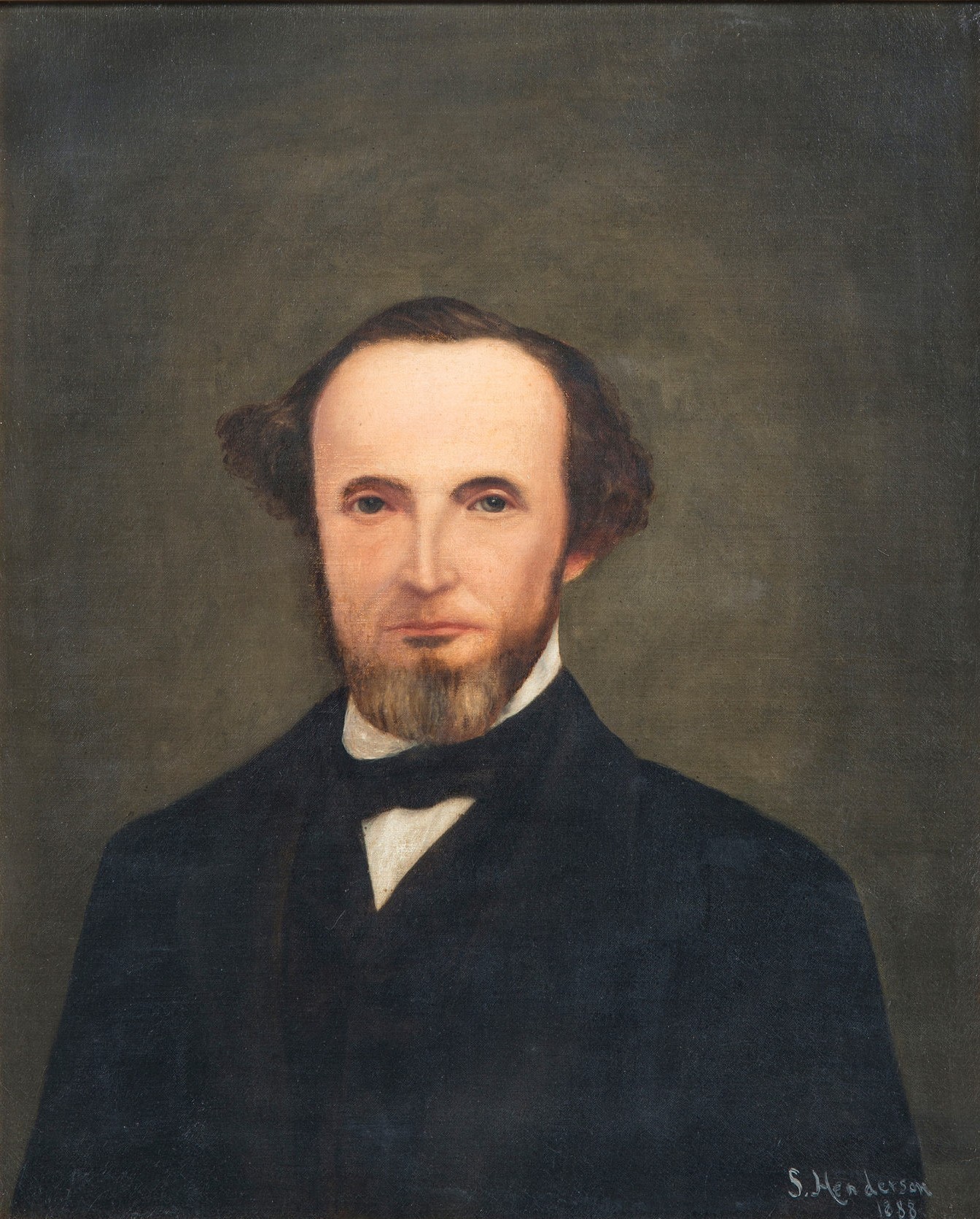
Portrait of Bloodgood Haviland Cutter (1817–1906) is the painting most closely connected to the Othmer Library upstairs since Cutter's own books can be found in the stacks. Nicknamed the “Long Island Farmer Poet,” Cutter was a wealthy landowner in Little Neck, who began writing poetry in earnest after retiring from being a gentleman farmer. This portrait, which was painted by Cutter's niece Sarah Purchase Henderson (1841–1914) when the poet was 71 years old, is based on an earlier photograph by Kornel W. Beniczky (ca. 1831–1873). This same photograph was adapted into engraving and used as the frontispiece for Cutter's 1886 book The Long Island Farmer’s Poems.
He is maybe best known for being in Mark Twain’s The Innocents Abroad (1869), which was derived from Twain’s experiences on a tour of the Holy Lands in 1867. Cutter, who was on the same voyage and thrilled to have the company of a famous author, is caricaturized by Twain as “Poet Lariat:" He is 50 years old and small for his age. He dresses in home-spun, and is a simple-minded, old-fashioned farmer with a strange proclivity for writing rhymes. He writes them on all possible subjects and gets them printed on slips of papers with his portrait at the head. These he will give too any man that comes along whether he has anything against him or not.
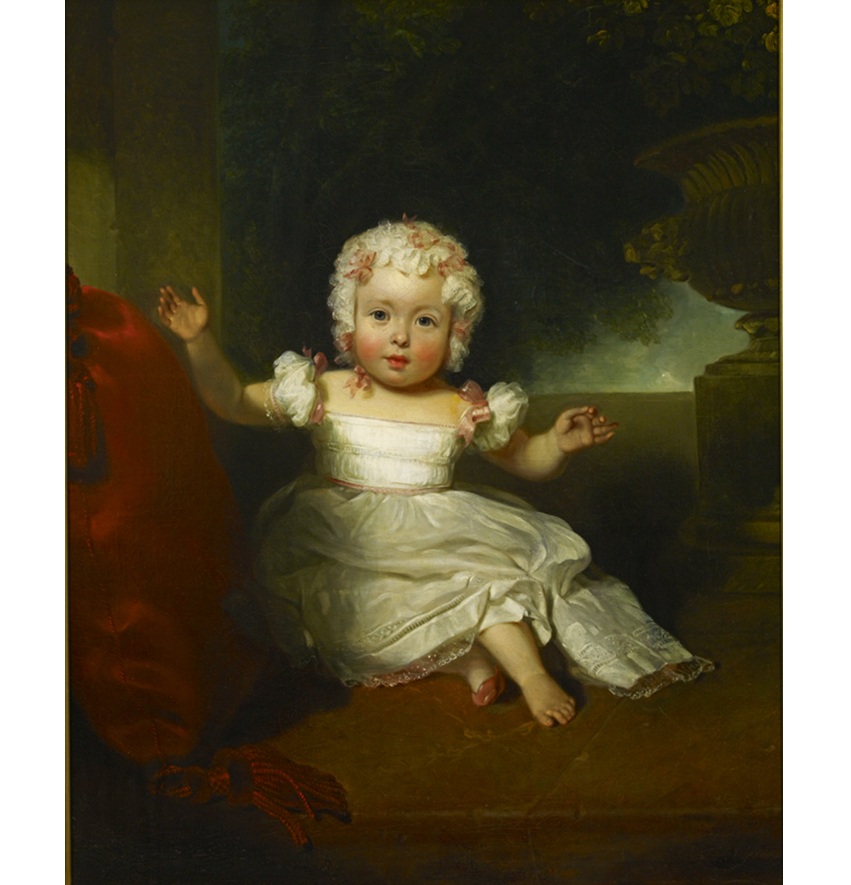
The youngest sitter of the Salon Wall portraits, Eloise Elizabeth Payne (1834–1894) would've been about 1 year old when her portrait was painted. While other examples of children’s portraits in the collection have stiff, formal poses, Payne’s has a naturalistic feeling. In the painting, which is attributed to New York painter Henry Inman (1801–1846), the infant Payne is even depicted as having removed one of her shoes.
Payne would marry Brooklyn clergyman Lea Luquer (1833–1919) in 1860. The combined Luquer and Payne families papers are now in the CBH archives; they include a travel journal, property indentures, estate records, correspondence, genealogical notes, and other material concerning the two families and related families, including the names Low, Lynch and Pierrepont. This portrait is also linked to the CBH artifact collection since it was donated in 1985 with the white christening dress Payne is wearing. The dress still retains its inset lace and trim, but there is no record of the pink bows being included.
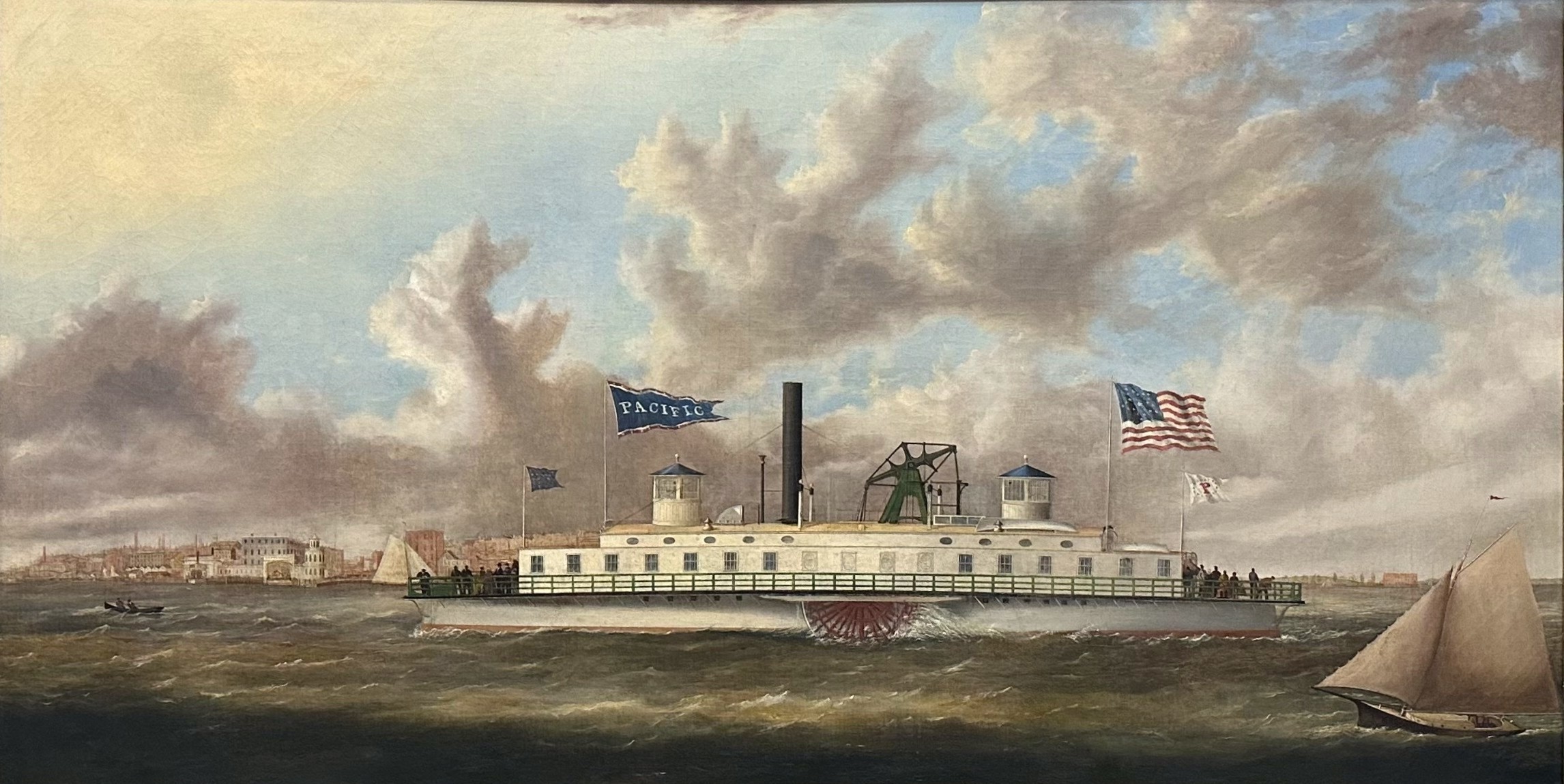
Ferries were the only way to travel between Brooklyn and Manhattan until the opening of the Brooklyn Bridge in 1883. This painting by father-son artists Joseph B. (1798–1876) and William S. Smith (1821–1921) depicts a typical mid-19th century ferryboat. Steamboat Pacific, built in 1859 by New York shipyard Neptune Iron Works, is propelled by a pair of large paddlewheels and has near identical front ends. This double-ended design allowed passengers and cargo to board either side of the vessel without the boat needing to turn itself around.
Like View of New York from Fulton Ferry Slip, Brooklyn, which is also on this wall, Steamboat Pacific was owned by the Union Ferry Company. The Company, which operated East River ferry routes from the 1840s until 1922, was a successor to Robert Fulton’s (1765–1815) original steam ferry of 1814. Steam-powered vessels revolutionized movement in New York's waterways; Fulton's ferryboats could reliably carry passengers between Brooklyn and Manhattan in only 12 minutes. Having consistent transportation between the two cities would transform Brooklyn. By 1870, East River ferries were carrying 50 million passengers annually—many of them commuting daily to New York but calling Brooklyn home.
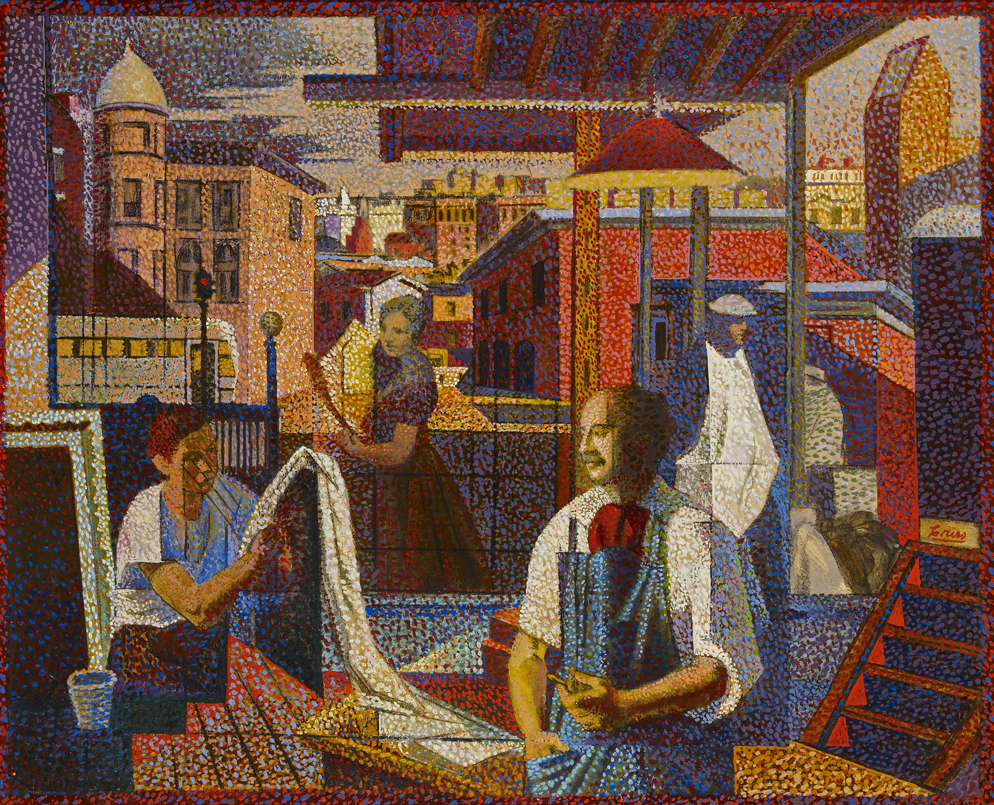
Like artist Miklos Suba (whose Portrait of Joralemon Street is also on the Salon Wall), Francis Criss (1901–1973) is best known as a Brooklyn Precisionist painter. His work during the 1930s and 1940s is characterized by the subjects familiar to precisionism (and of Brooklyn in the mid 20th century), with abstracted industrial facilities and urban infrastructure.
View of Brooklyn Heights is from a later period—late 50s and early 60s—when Criss was incorporating pointillism and cubist elements in his work. Criss had also begun to add figures to his paintings, expressing an interest in showing workers and ordinary people living in, and contributing to, the community. This picture was painted at his residence at 398 E Third Street in Park Slope and in his studio on 7th Ave. near Flatbush Ave. Though the models for the people in the background are not known, the man in the foreground is a Criss self-portrait and the female figure at lower left is drawn from his daughter Katherine.
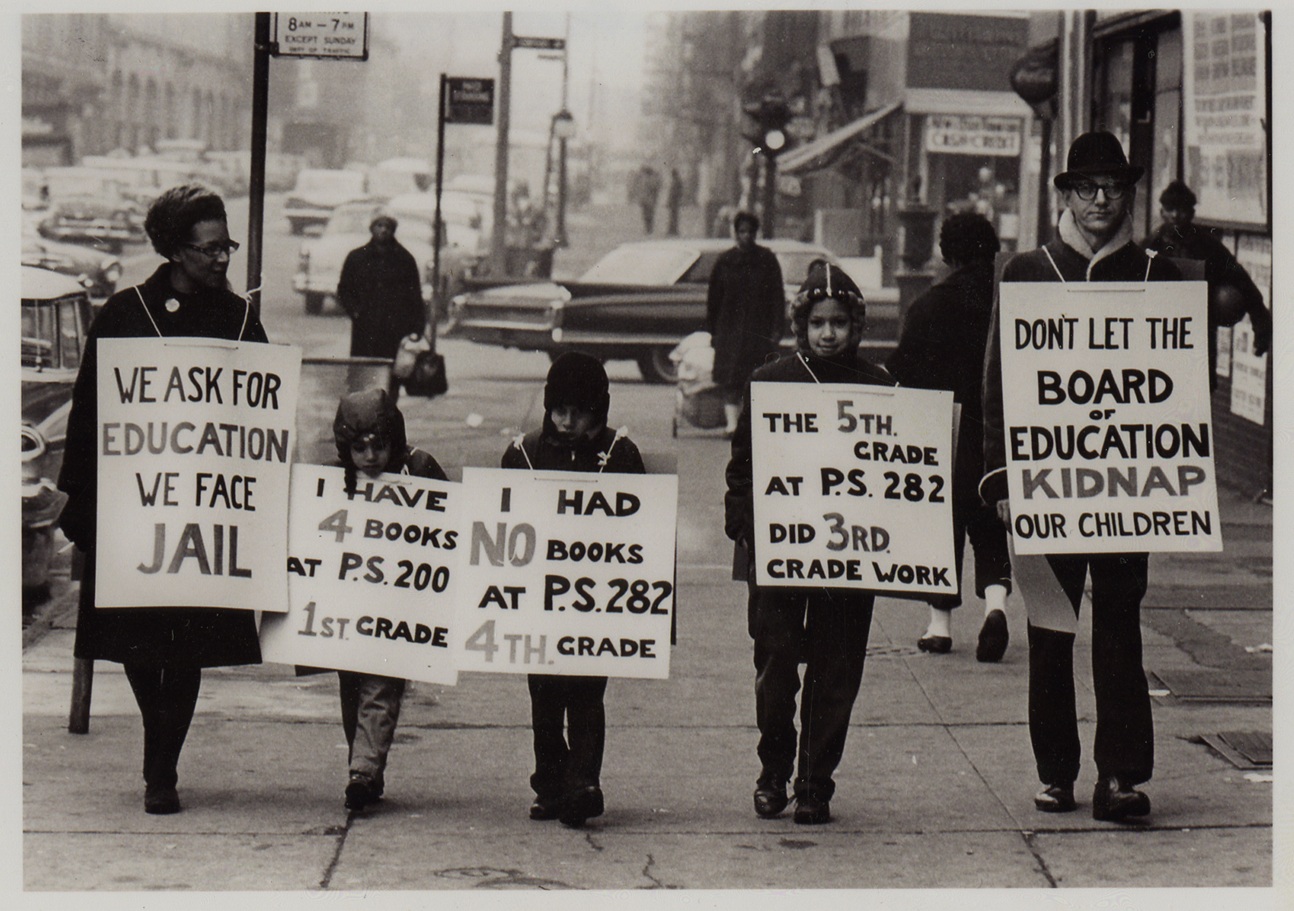
This photograph depicts the Bibuld family, an interracial family, protesting for educational equity in partnership with the Brooklyn chapter of Congress of Racial Equality (CORE). The Bibulds—mother Elaine, father Jerome, and children Douglass, Carl, and Melanie—had moved homes within the borough after a 1962 house fire. The difference in resources between their old and new public schools was stark and part of larger pattern of marginalization by the Board of Education of primarily Black schools. Without the Board’s recognition or approval, the Bibulds would sit their children in a largely white public school in Bensonhurst for the remainder of children’s primary education. In the 2000s, Elaine, Jerome, and Douglass gave oral histories of their experiences, transcripts of which are now part of the Brian Purnell Civil Rights in Brooklyn Oral History collection.
The photograph is one of many from the Rioghan Kirchner Civil Rights in Brooklyn collection, which is largely related to the Brooklyn chapter of CORE. One of the most dynamic civil rights groups in New York City, members of Brooklyn CORE led local demonstrations to desegregate housing, integrate public schools, create jobs, and improve sanitation services in the predominantly Black neighborhood of Bedford-Stuyvesant from 1960-1964.
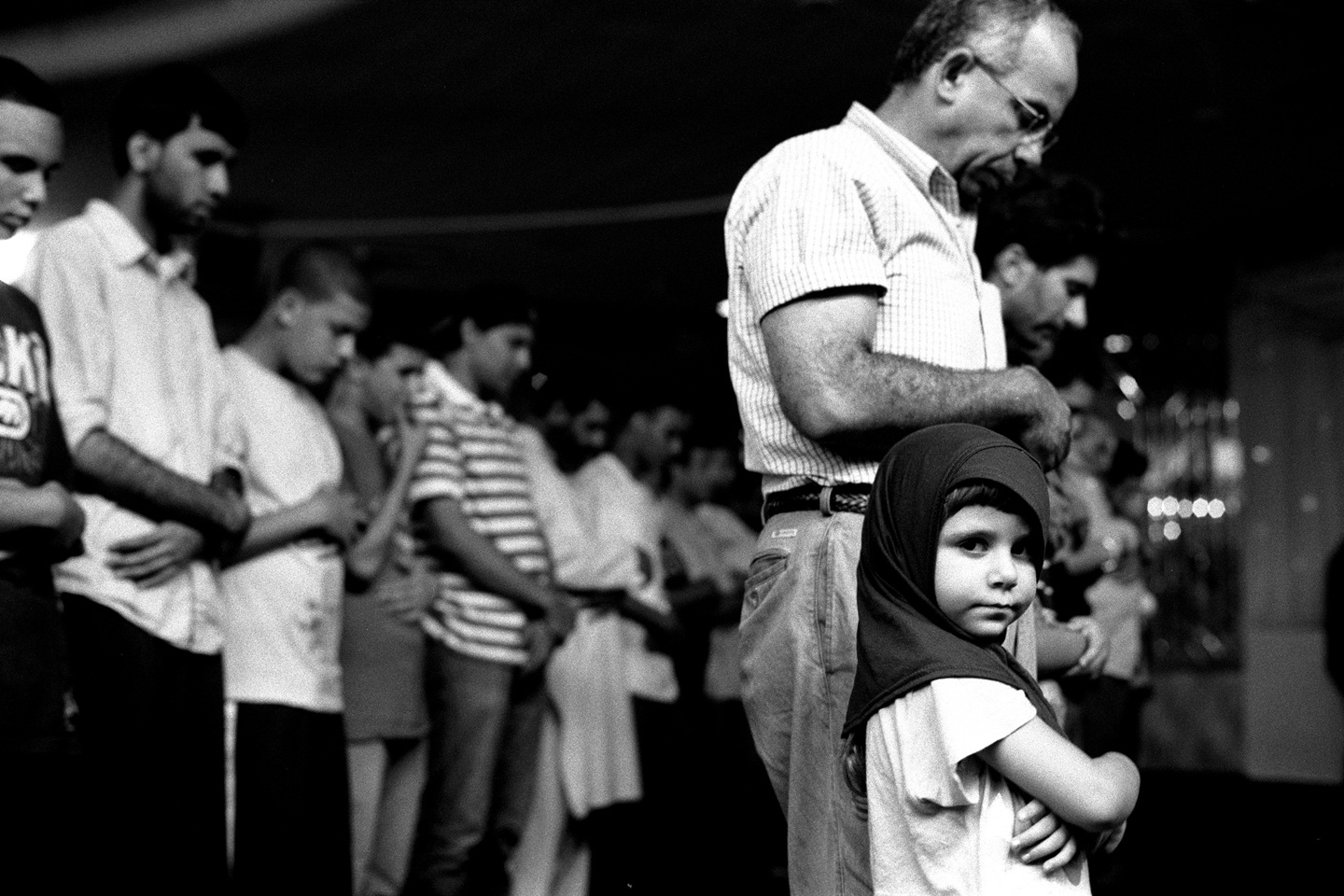
This photograph from the Robert E. Gerhardt, Jr. collection portrays a girl wearing a hijab standing with her father and others praying at the Muslim American Society in Bath Beach. The Society, which opened its 1933 Bath Avenue building in 2002, includes the first Muslim youth center in the United States.
Bath Beach, and neighboring Bensonhurst, were once part of the independent town of New Utrecht. Granted municipal rights by the Dutch colonial government in 1661, New Utrecht wouldn’t join greater Brooklyn until 1894—the last of the six original towns of Kings County to be annexed. The land had been purchased from Canarese Sachem Penhawitz (active 1630s –1640s) by the Dutch West Indian Company, and a patent was later granted to Anthony Janszoon van Salee (1607–1676) in 1643. A half-Moroccan, half-Dutch, son of a pirate, van Salee’s religion is not known for certain, but he was possibly the first free Muslim settler to what would become the United States.
This blog post reflects the opinions of the author and does not necessarily represent the views of Brooklyn Public Library.
Post a Comment
While BPL encourages an open forum, posts and comments are moderated by library staff. BPL reserves the right, within its sole discretion, not to post and to remove submissions or comments that are unlawful or violate this policy. While comments will not be edited by BPL personnel, a comment may be deleted if it violates our comment policy.
eNews Signup
Get the latest updates from BPL and be the first to know about new programs, author talks, exciting events and opportunities to support your local library.