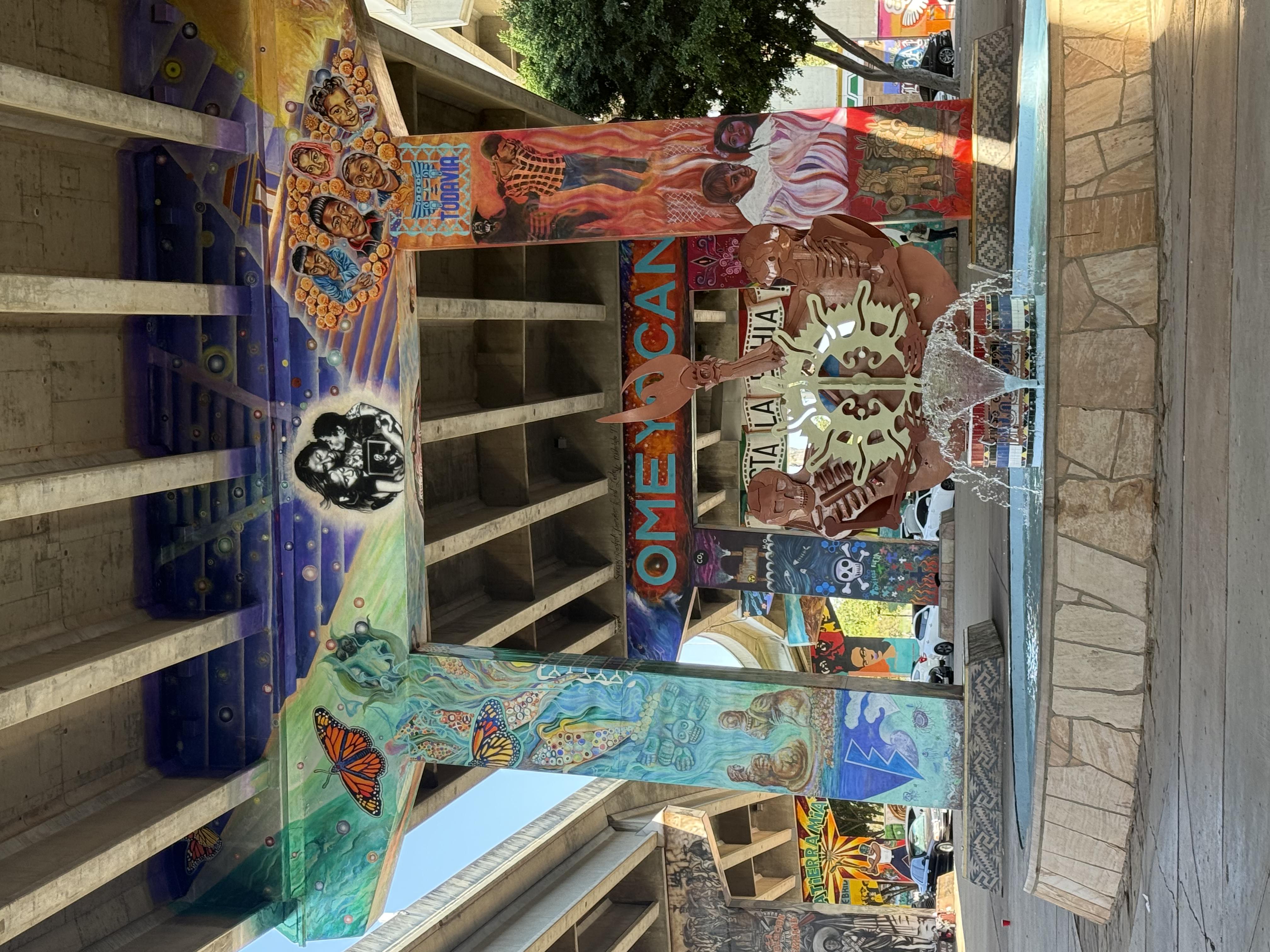
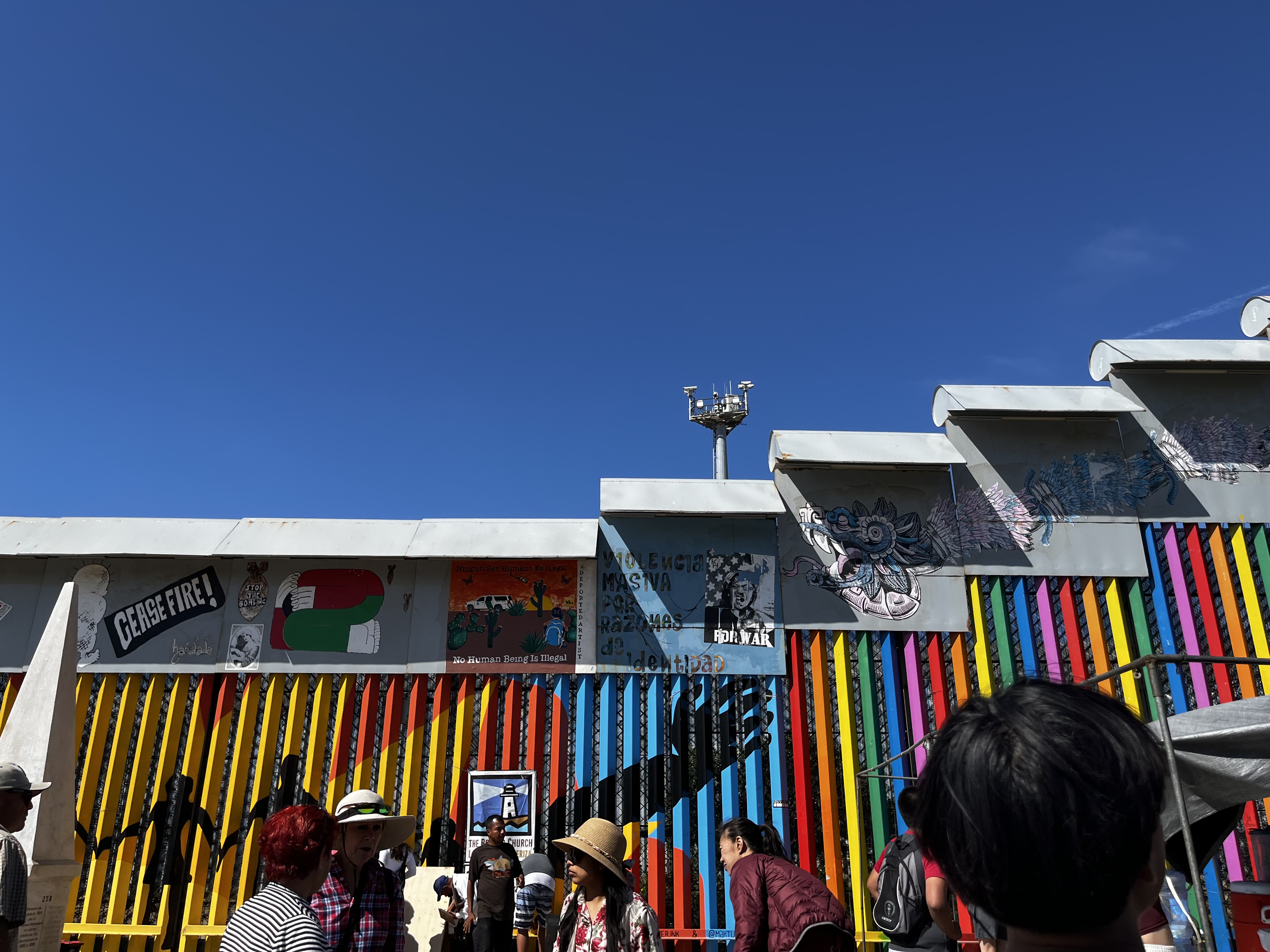
A couple of days ago, I flew from New York to San Diego with my Spanish class. Five hours later, we were standing in front of the actual U.S.-Mexico border wall. It was right next to a mall, which is a weird positioning nobody warns you about. We ate lunch, hopped on a bus, and then walked across into Tijuana.
Going through customs was surprisingly smooth, but what stuck with me was realizing that this is what hundreds of thousands of people do every single day. For us, it sort of felt like a field trip. For a lot of people, it's routine.
The first stop in Tijuana was Las Playas, a beachy neighborhood along the border covered in murals. Our guide, Ricardo, brought us to the Friendship Garden, a spot where people on both sides of the wall connect through gardening. We met the garden's creator and heard about the relationships people have built across a fence. It was a good introduction to what the rest of the trip would look like.
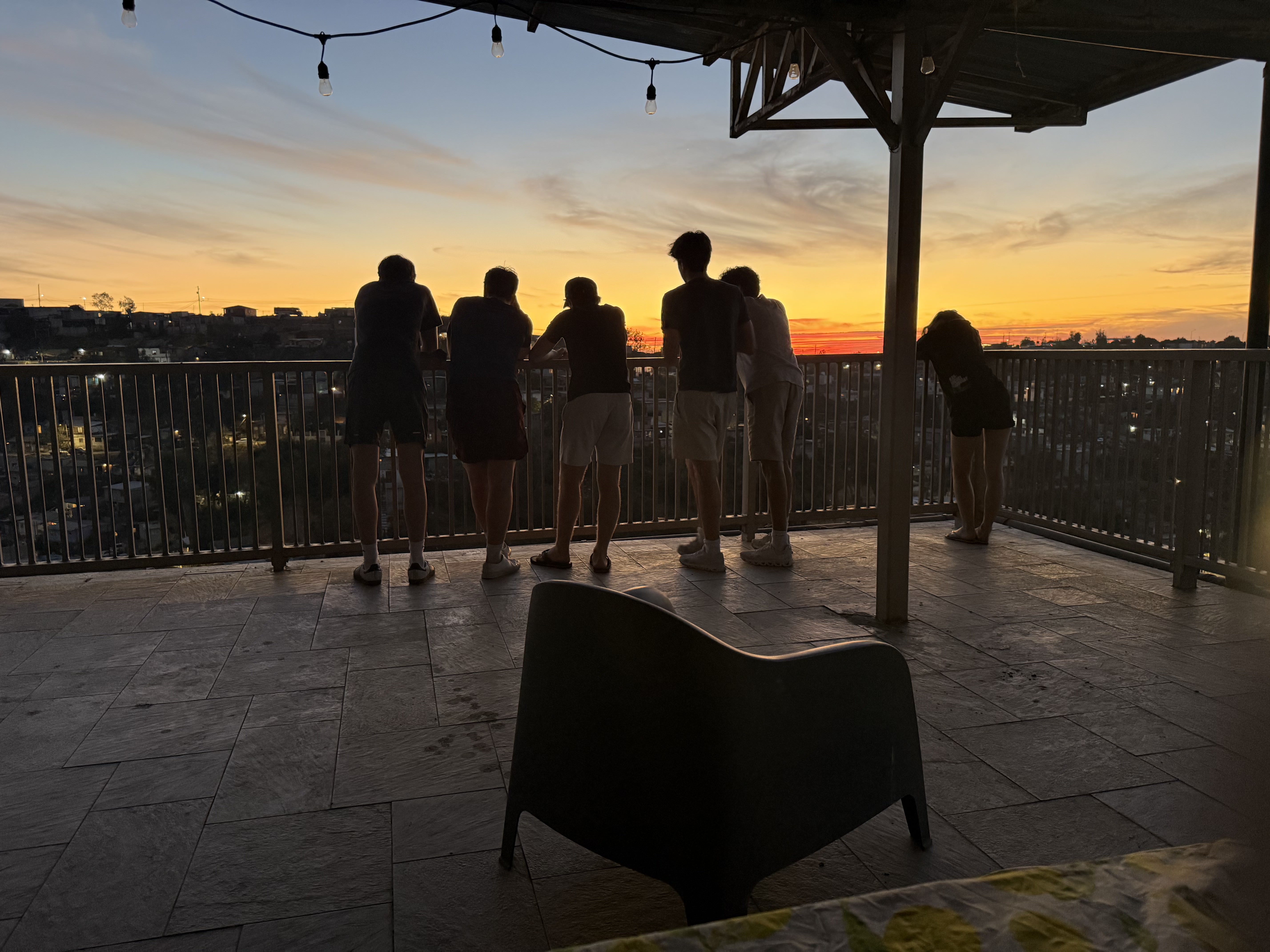
We stayed at Hodeni Casa Hogar de los Niños, a community shelter and school for kids with unstable homes. The promotoras who ran the kitchen cooked us meals every night that we ate on the roof. One night, it was taquitos. Another morning, chilaquiles. I'm still thinking about the food, honestly.
During the days, we did everything from pulling weeds for a future food forest to folding zines about how to watch out for ICE. We played soccer with local kids who were significantly better than we were. We visited Casa Eunime, a center for children affected by HIV, and spent the afternoon doing arts and crafts and playing sports with them. Different circumstances, but the afternoon felt pretty normal. Kids are kids.
The day that really stuck, though, was when we went to Friendship Park for a binational church service held on both sides of the wall. The border wall doubled as a communion table. Afterward, we sat with migrants and listened to their stories. Later that night, a chef named Leo cooked us one of the best meals of my life and told us about crossing into the U.S. undocumented to work in Florida. He left when his daughters were little and came back when they were adults. Nobody at the table said much after that.
I came home on Wednesday with a sunburn and a lot to process. Tijuana isn't what most people picture when they hear "the border." It's a place full of people figuring it out under really difficult circumstances, and I'm glad I got to see some of it firsthand.
This blog post reflects the opinions of the author and does not necessarily represent the views of Brooklyn Public Library.
Post a Comment
While BPL encourages an open forum, posts and comments are moderated by library staff. BPL reserves the right, within its sole discretion, not to post and to remove submissions or comments that are unlawful or violate this policy. While comments will not be edited by BPL personnel, a comment may be deleted if it violates our comment policy.
eNews Signup
Get the latest updates from BPL and be the first to know about new programs, author talks, exciting events and opportunities to support your local library.