There’s a very specific kind of horror that comes with getting your period at the absolute worst, unexpected, and let's face it: unwanted time. You get it right before first period when you're already at school, or in the middle of plans you were really excited about. It comes when you're at the pool or on a school trip, maybe when you're on a date or in gym class. One second you’re living your life, the next you’re mentally inventorying pads and tampons, checking your outfit, and asking a friend to do the universal “can you look at the back of my pants?” inspection like it’s a military operation.
When that happens every single month, it’s easy to start thinking of your period as an inconvenience you have to manage instead of something your body might actually be trying to tell you. Most period conversations are about controlling it: hide it, prepare for it, survive it. That’s where period-tracking apps come up. It makes sense why they do: you log a few symptoms, tap some cute icons, collect little badges, and suddenly it feels like you’ve hacked your body. Your phone tells you when your period’s coming, when you’re ovulating, when your mood might tank, and for a second, it feels weirdly comforting. Organized, even. The apps are aesthetic, and the reminders are kind of addictive. You feel productive for checking in every day. And technically, you are being productive...
...but where's that information going after you enter it? Research from the Mozilla Foundation has raised concerns about how some period (and pregnancy) tracking apps handle user data, noting that very personal information is often collected and not always protected in ways users might expect. At first, it feels like you're just entering information that lets you get monthly reminders...but when you look closely, you might notice other features. What you log about your cycle can reflect patterns in your health and your daily routines.
Privacy International points out that in a post-Roe context, that kind of data can take on new meaning depending on how it's stored or shared. Research by K. Amelang adds another layer, showing that many people feel uncertain about these risks while still relying on apps because they're convenient. Maybe we should start questioning the true price of convenience.
There are other ways to track your period that keep that knowledge with you, and might even help you feel empowered about having a period. One of these options feels almost unexpectedly simple: a period tracking bracelet, inspired by a guide from itspixie.com, turns your cycle into something you can see and touch instead of something you type into a screen. Every year, May is National Menstrual Health Awareness Month, and every year, I make these bracelets with the teens at my library. In fact, join us on May 20th to make one!
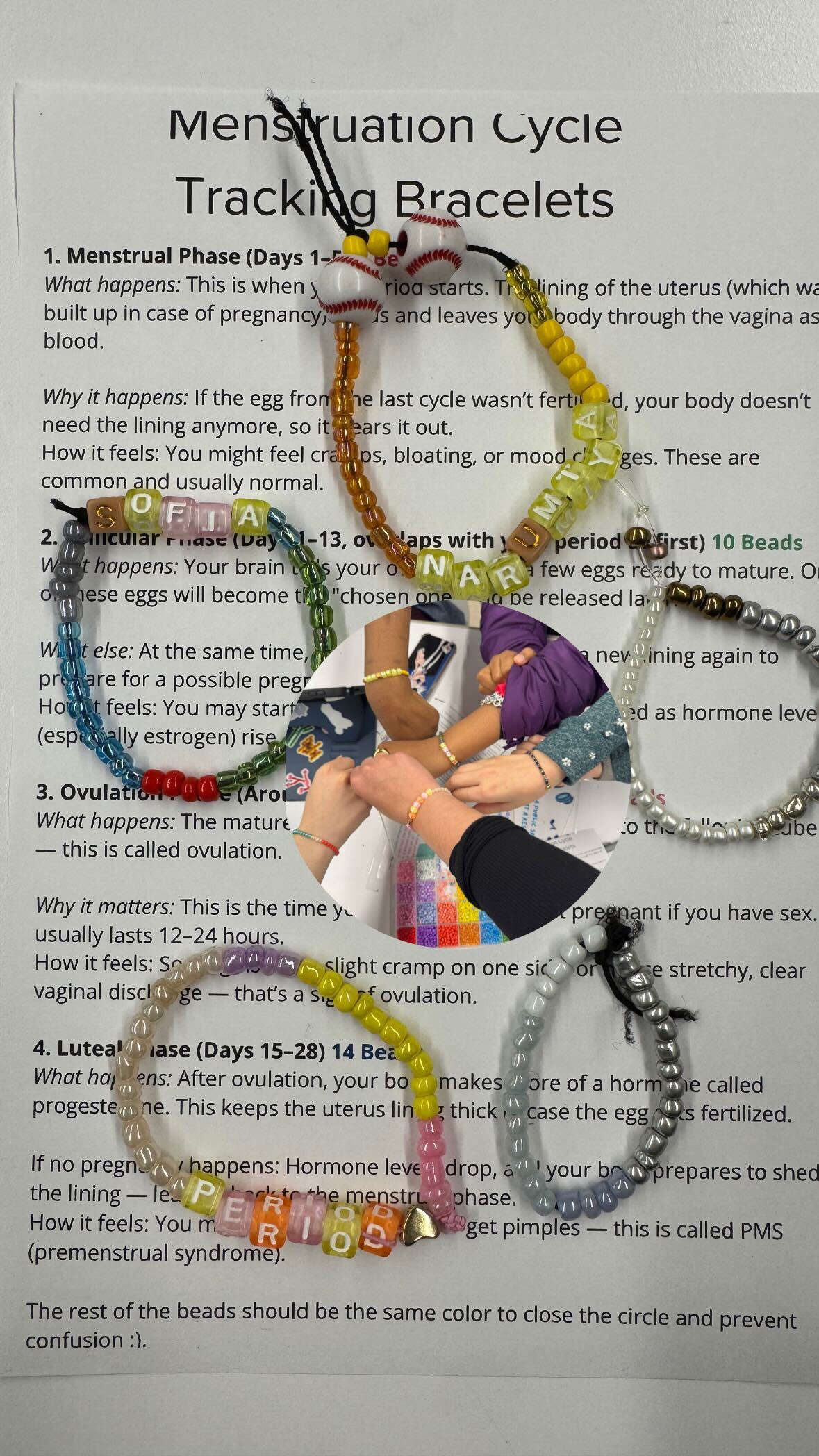
The process starts with choosing beads to represent the days in your cycle. If you already have a sense of how long your cycle is, you can match that number. If not, you can begin with a general range and adjust as you learn more about your own pattern. The colors are completely up to you. Some people like to mark their period days with a specific color, while others pick combinations that simply feel right to wear every day.
Once you have your beads, you string them onto elastic or thread so the bracelet fits your wrist. One bead should stand out as a marker. This is the piece you will move forward each day. As time passes, you shift that marker along the bracelet, one bead at a time. When your period begins again, you return the marker to the starting point. In no time, you'll start to see patterns, and you recognize where you are in your cycle without needing a notification pinging on your phone.
Pairing this with a zine I've created where you track how you feel during your period can deepen that awareness. You might notice changes in your energy or shifts in your mood that begin to follow another pattern of its own. Writing those observations down creates a record that belongs entirely to you. It doesn't need to be perfect or detailed to be useful, it just needs to be honest.
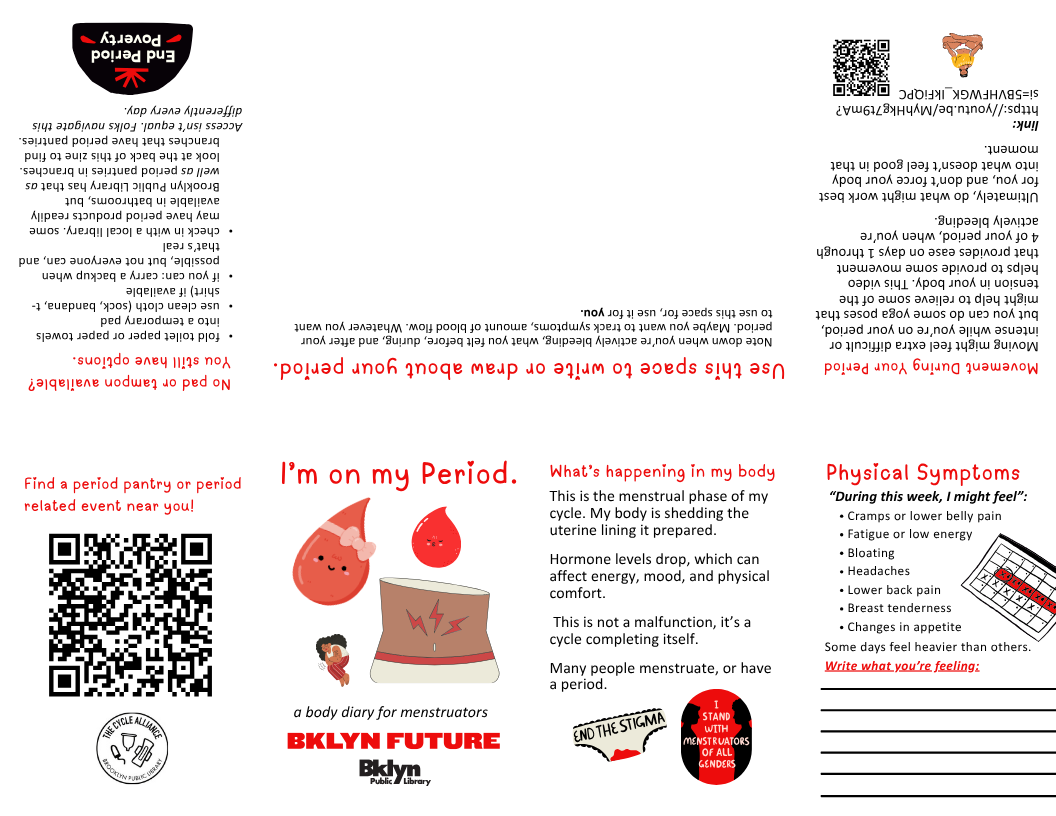
(You can download this zine here. If you've never folded a zine before, watch this video tutorial on how to.)
At Brooklyn Public Library, we've got The Cycle Alliance that shows that this kind of tracking can also be creative and shared, rather than private or clinical. Learning about cycles in a community setting can make the experience feel more open and less isolating, especially when everyone brings a slightly different perspective. Look at this page to find events happening all across Brooklyn Public Library branches, where we're talking about periods and acknowledging menstruators of all genders and backgrounds. Some branches even have gender neutral period pantries where you can pick up period products for free and take them, no questions asked.
It's also important to hold onto the fact that no two cycles look exactly the same. You might bleed for a shorter stretch of time, or your cycle might take longer to repeat. That difference doesn't mean something is wrong. It reflects the reality that bodies are not identical, even when they are often treated that way in conversations about health.
When you begin to see your period as a form of knowledge, the experience changes in a subtle but important way. You aren't just waiting for it to arrive or trying to avoid being caught off guard. You're paying attention to what it tells you, and YOU are choosing how to respond in a way that keeps that information in your own hands.
Find books about Period Equity here.
This blog post reflects the opinions of the author and does not necessarily represent the views of Brooklyn Public Library.
Post a Comment
While BPL encourages an open forum, posts and comments are moderated by library staff. BPL reserves the right, within its sole discretion, not to post and to remove submissions or comments that are unlawful or violate this policy. While comments will not be edited by BPL personnel, a comment may be deleted if it violates our comment policy.
eNews Signup
Get the latest updates from BPL and be the first to know about new programs, author talks, exciting events and opportunities to support your local library.