Content note: This story contains strong language, descriptions of violence, and descriptions of racism.
This is the third part in a series, A Hanging in Brooklyn. Read part one here. Read part two here.
Newspaper coverage is the only readily available documentation of this case, outside of the trial transcript held at the Center for Brooklyn History and quoted extensively in the two previous installments. Wherever possible, I have relied thus far on the trial transcript as the higher form of evidence. Everything that occurred after trial, including the appeals, Jefferson’s life in jail, his hanging, and his burial, is only documented in newspapers. The bias that this introduces is unavoidable—19th century newspapers editorialized blatantly in much of their reporting. The racism and sensationalism that pervades the reporting leave serious doubts about the papers’ accuracy. Though I rely on the newspapers to tell the rest of the story, none of their reporting can be taken as absolutely accurate.
Accepting his Fate
At first, Alexander Jefferson welcomed death. His execution was set for May 11th, fifty days after sentencing. His attitude towards his brother remained harsh and his sense of responsibility for the crime waivered. “The only unfair thing about my hanging,” he is quoted by the Brooklyn Union as saying, “is that it is only one life for two. Now, if Celestial [...] were swung up, too, it would be two lives for the two that are gone.” Jefferson had attempted to kill his brother and his former girlfriend, Annie Jackson, but succeeded only in killing an older man and Annie's mother, Emma.
The Union also reported that his lawyer, George Elliott blamed some of the unsuccessful trial on his difficulty securing Black witnesses, particularly those who would testify to Jefferson's mother’s death in an insane asylum. Elliott claimed that those witnesses were afraid of being haunted by Jefferson’s victims, but the overall treatment of Black witnesses by the press and public could also have had an impact. Nevertheless, against his client’s wishes, Elliott was determined to stay the execution and appeal the sentence on the basis that Jefferson was insane. Elliott was working pro bono on the case, determined to get Jefferson acquitted in spite of his client’s profession, "I am ready at any time. I believe it is God's will that I should go."
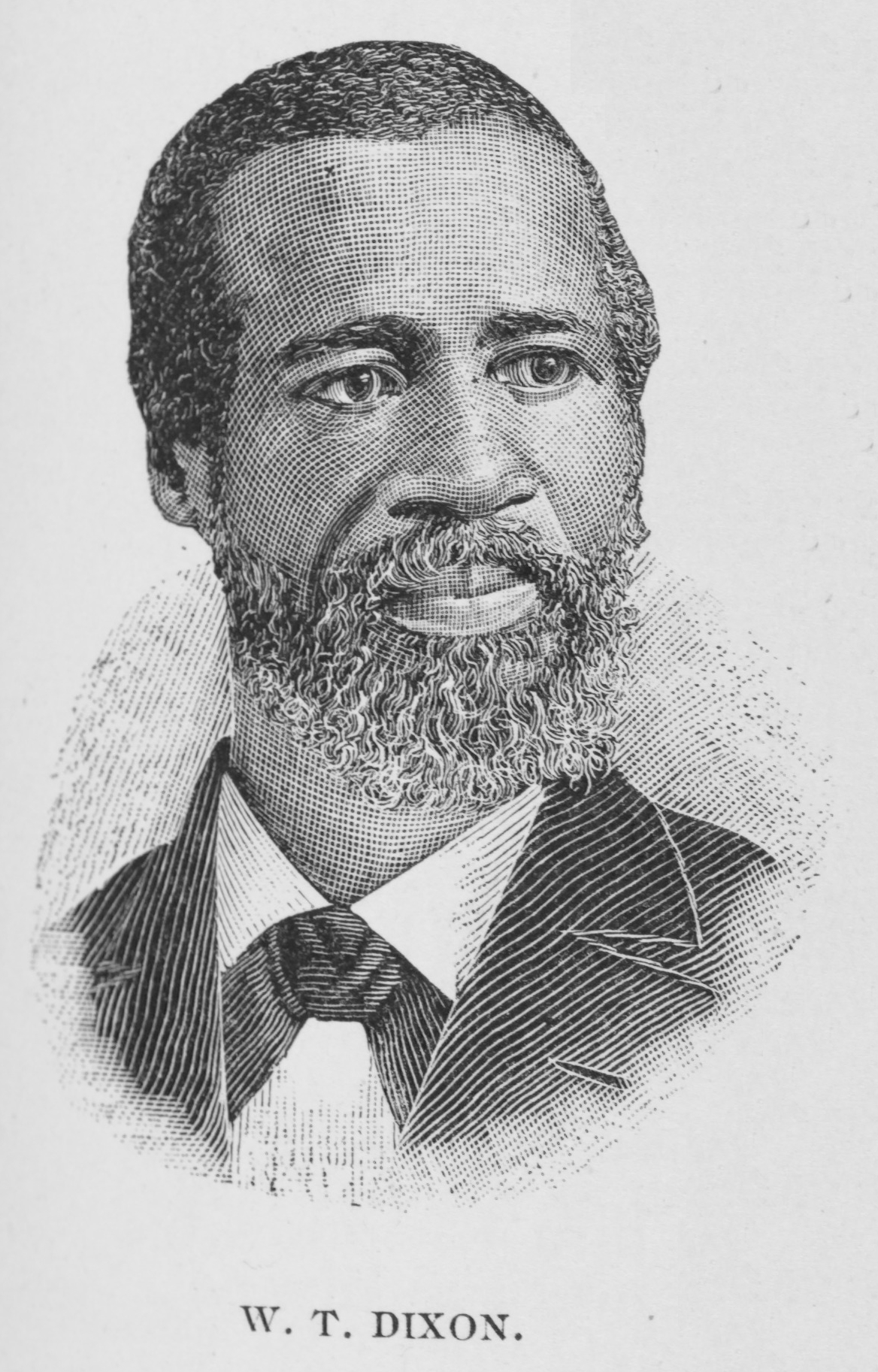
Within seven days of the sentencing, Jefferson professed religious and temperance interests after studying with King’s County prison chaplain, Reverand Job G Bass. The Eagle reported that Bass and "Mr. Dickson, a minister of his own color, are the spiritual advisors of the condemned man". This is likely to be William T. Dixon, pastor of the Concord Baptist Church on Duffield street, a major figure in Black Brooklyn society at the time, with roles in the church, education, and social welfare. Bass and Dixon stood with Jefferson in favor of his execution. They wrote publicly to Elliott to ask him to drop further appeals, citing Jefferson’s aversion to the life sentence that would be his alternative, his resignation to his fate, and the cruelty of holding out hope for a condemned man. This extraordinary missive from men of faith came with a caveat: “We may not be wise councellors, and in sending this to you may have done more than our duty in apparently interfering with what might ordinarily be considered as not in the line of our calling”. The Eagle editorial board disagreed not with the death penalty, but with the call to cease appeals. They wrote that "A human life is at stake. [...] the State has no more right to hang Jefferson than he had to kill his victims." They argued that the State must first fully try Jefferson and that his lawyer should exhaust all appeals. In a grimly ironic foreshadowing of the final hanging to come, they wrote that “Since the State cannot afford to hang a man twice it would be far better to hang him properly the first and only time”.
Perhaps religious council led Jefferson to reconcile with Celestial. Despite being the target of both the crime and Jefferson’s vitriol, Celestial was determined to see and speak with his brother. At the jail, they held hands through the bars of the cell and whispered together for fifteen minutes, both crying. Celestial’s compassion for his older brother and his paternal feelings towards him had been evident since the trial, when he testified for the defense, “I was never angry with him, always tried to talk to him for his own benefit to help him along [...]”1 His love was evident when he visited Celestial again in jail, remembering that "At one time when I was keeping house, Alick boarded with me, and we got on first rate together".
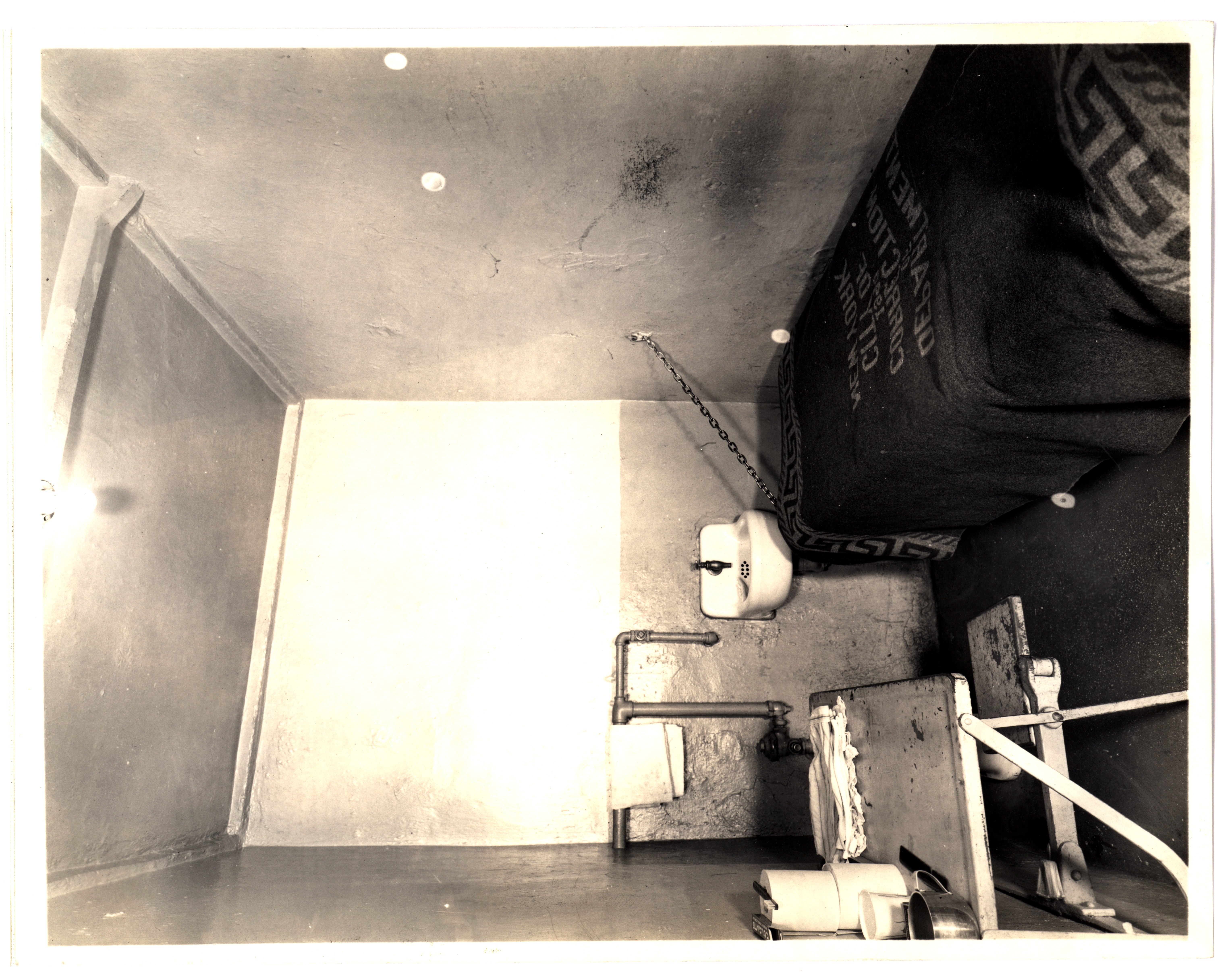
Public interest in Jefferson continued through the spring of 1883. He continued to receive the pastors and a woman the papers describe as his “his aunt, Mrs. Doty”, who was likely Elizabeth Doughty, the family friend he was living with at the time of the murder who had testified at the trial in his defense. The many visitors who simply wanted to gawk at a famous murderer had to be turned away.
In addition to religious interest, Jefferson received political interest. The Eagle accused Supervisor Jonathan W. Gedney of the Twenty Fifth Ward of currying favor with that area’s Black residents by requesting special treatment for Jefferson. However, that may have been the Eagle’s editors’ own political maneuvering; the bill that Gedney promoted advocated only the same treatment of Jefferson as any other death row inmate.
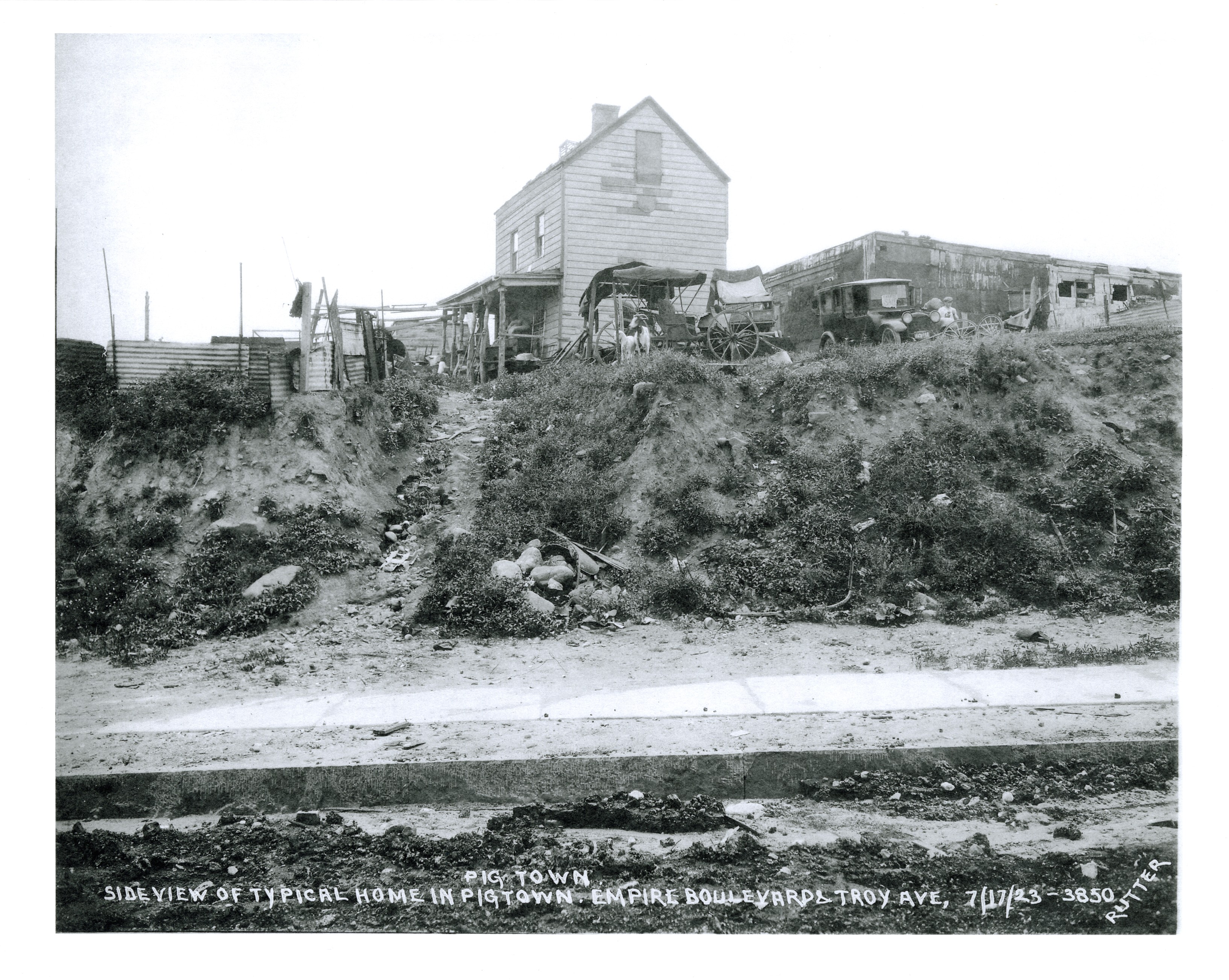
As the execution approached, the press was eager to discuss every salacious detail of the perpetrator and his victims’ lives. “NEAR THE END,” a headline declared, “How the anniversary of the Murderer's Birthday Will be Celebrated—Annie Jackson Engaged to be Married—The Condemned Man Visited by his Brother”. Jefferson was eager to see Annie visit him in jail, and the press, evidently enjoying the drama, was digging into her personal life. The Eagle was skeptical at Jefferson’s claim that he wanted Annie to visit him so that he could “forgive” her for her unfaithfulness. Celestial told the press that he wanted Annie to visit Jefferson, and that she was engaged to a man named William Clear. The Eagle reported that she lived “in a small shanty” south of Empire Boulevard, between Utica and Buffalo, with two women who may have been Clear’s sisters. The three women worked as sewing machine operators.
That spring, practically every day saw a new update in the case:
- On April 21, 1883, Annie at last visited Jefferson in jail, shaking hands and crying as Jefferson had once with Celestial.
- On the same day, Jefferson wrote to Elliott thanking him and asking him to drop his appeals. He wrote “I am very greatfull and thankfull to you for every effort put forth in my behalf. You have done all you could I can ask or wish for now." The Eagle reported that "He said he wants his hair cut so that he can go to the gallows decently".
- April 22, 1883: The Eagle reported that no more appeals will be made.
- April 23, 1883: The Eagle reported that Elliott filed an appeal to the Supreme Court.
- April 29, 1883: The Eagle printed a letter from Jefferson to the public. Though they had previously described Jefferson as “illiterate” (ignoring the letters he had on him when he was arrested), he was later reported to write several times to friends or the press. This time, it was to oppose his representation in the press. He affirmed his desire to accept his sentence and added sarcastically that "anything else that may appear in the public press will be the work of some smart newspaper reporter, who is blessed with the faculty of being a mind Reader and not the true sentiments or feelings of Yours respectfully."
- May 3, 1883: Two Black women visited Jefferson to pray and sing.
- May 11, 1883: The day Jefferson would have been hung had Elliott not appealed.
- May 18, 1883: The Union titled a profile on Jefferson “A Queer Criminal. The Colored Murderer Who Wants to be Hanged.” Though Jefferson could sometimes ramble, many of his statements to the reporter were lucid: “If I had friends and money the rope would never touch my neck; but I do not care for the world outside or what people think of me. The Lord is with me, and He has saved my life for a purpose. The papers have not treated me fairly; they make me out an ignorant colored man, a sort of wild beast, so that when people come here they look at me as they would at an animal in a cage." Again in refutation of earlier claims of illiteracy, Jefferson was found in his cell writing a lecture on temperance; he held alcohol to be the source of his violence.
Stories on Jefferson dried up until August 1883, when an attempted profile appeared in the Eagle. The press may have lost interest because Jefferson was no longer giving statements; he refused to see the reporter, leaving them to fill column inches with a flowery description of the jail and a quote from the jailor.
Rejecting the Death Penalty
In December 1883, a new reformer entered Jefferson’s orbit. Papers reported on Elliott’s appeal and on Christmas celebrations at Raymond street. The Christmas celebrations marked the first time that a prison reformer named Linda Gilbert was mentioned in connection with Jefferson; in this case, "the prisoners’ friend” provided much of the holiday meal enjoyed by the inmates. Jefferson declined to leave his cell for the celebration, but he would cross paths with Gilbert soon enough. After moving to New York in 1873, Gilbert founded the Gilbert Library and Prisoners' Aid Society, and was responsible for creating several prison libraries and filling them with thousands of volumes. She was also an inventor and a schemer; she made practical improvements to prison libraries but made inflated claims and grandiose suggestions that hurt her credibility, like building glass towers on the Brooklyn Bridge.
In January of 1884, after his break from talking to reporters, Jefferson returned to the press with a change of heart regarding his death. While before he espoused the religion and temperance of Reverends Bass and Dixon, he now spoke of the inhumanity of capital punishment and the gallows, to a reporter who disguised himself as clergyman to sneak into the jail to conduct the interview. He expressed his opposition to the death penalty:
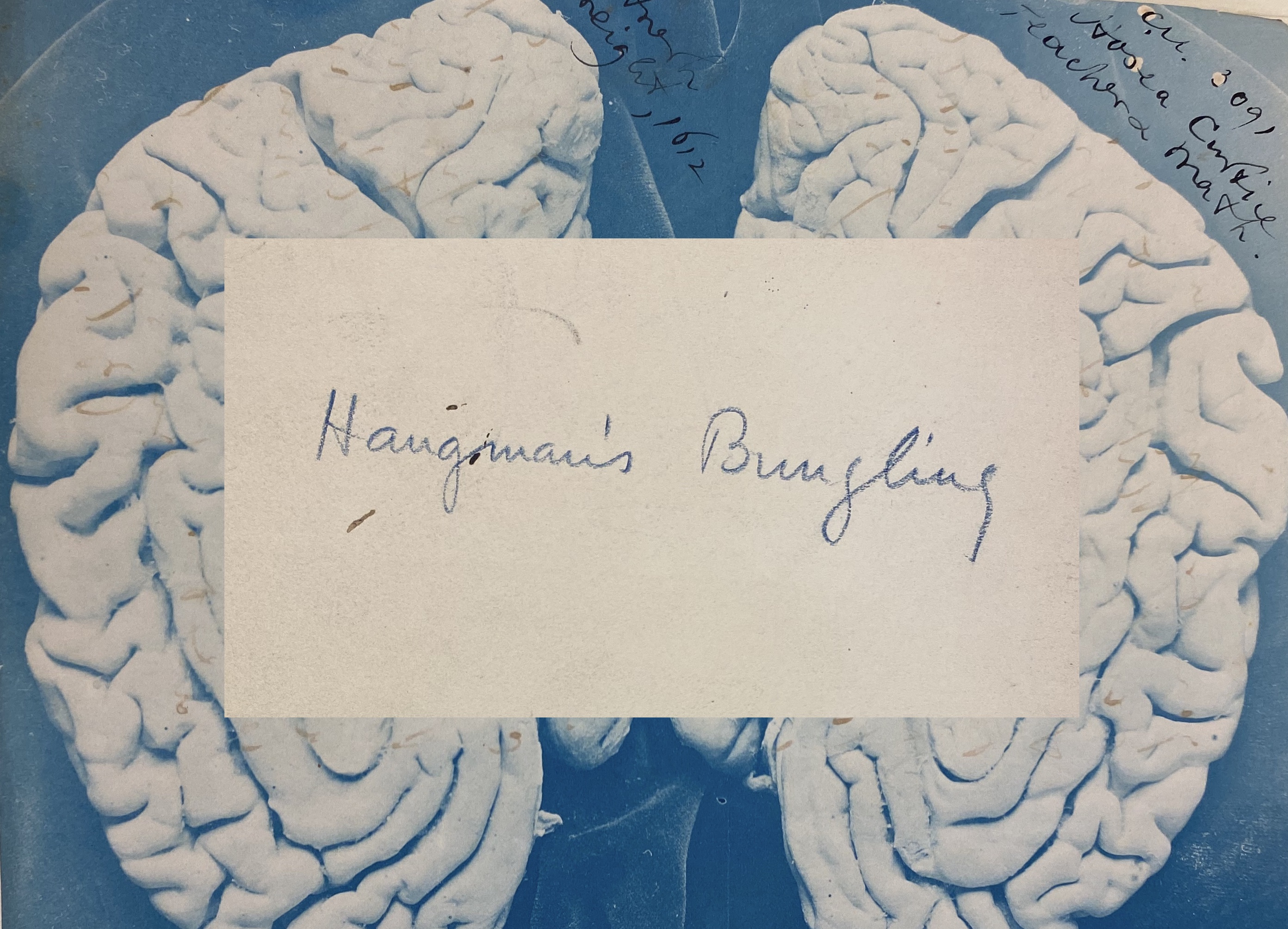
"I want to say a word or two about capital punishment. I cannot conceive how a just God will permit His special prerogative to be taken out of His hands. He says vengeance is His and not man's and yet man presumes to take revenge upon man [...] When the law is satisfied, if I am to be strangled, a doctor will take out this brain of mine to see if it is all right [...] Now, do you suppose that if, when he has cracked my skull, he finds anything wrong here [...] he will tell the public of it? Oh, no. Could they put that brain back? Not at all [...] It will be too late then."
After his change of heart, he sent for Linda Gilbert, who met with him and offered her support.
Despite Elliott’s appeals and Jefferson’s new hope to live, the Supreme Court denied his case and a new hanging date was set for April 4, 1884. Elliott again appealed and a stay was again granted. Jefferson had now faced death twice and been spared twice. He was sentenced yet again in June 1884, for a hanging date of August 1. The Brooklyn Union’s reporting showed a desperate man, seeking any chance to escape death, finding blame with his brother and his lawyer. It also noted that the judge had not considered that the date would conflict with the anniversary of the emancipation of the West Indies, a day of celebration for many of New York’s Black residents, and would need to be moved again. In the end, the day was not changed. August 1 would be Alexander Jefferson’s final day on earth.
June and July 1884 saw a fully renewed press interested in Jefferson as the inevitability of his death bore down. Jefferson expressed opposition to the method of death—hanging—asking to be killed by electricity or chloroform, which were thought at the time to be more painless. Elliott attempted an appeal to New York Governor and future president, Grover Cleveland. The press offered rebuttals, fully in support of his hanging now that most appeals had been exhausted, drained along with the rest public interest they could squeeze out of this case.
Brooklyn’s Black elite remained interested in the Jefferson case. In July of 1884, the Doctor James N. Gloucester is first mentioned in connection with the case (his middle initial is incorrectly reported as “M”). Gloucester was the founder of the Siloam Presbyterian Church, a pastor, a doctor, a friend to John Brown, and a supporter of the underground railroad. He is perhaps best known today as the husband of Elizabeth A. Gloucester, a wealthy Black businesswoman, abolitionist, and philanthropist. Unlike Dixon, Gloucester opposed the death penalty for Jefferson. His interest lent not only medical credibility but social goodwill and demonstrated the support of Brooklyn’s leading Black reformers.
Still, Jefferson’s crimes were violent and his public persona difficult to reconcile with the wealthy and learned pastor’s principles. Gloucester clarified that he supported clemency, "Not because of any redeeming qualities to be discovered in the past history of the man, for as far as known that history has been bad in character and a knowledge of it excites nothing but disgust.” Instead, he though Jefferson should be spared the noose "because he is a poor, friendless, ignorant and debased black man, shattered and diseased both in mind and body, fit only for the insane asylum as a place of refuge and recuperation." By this point, Jefferson had rejected Reverend Bass, but he still allowed Dr. Gloucester to visit. Gloucester took this fluctuating to be a sign of insanity. In every way, he said, physical, mental, and spiritual, Jefferson was sick and should be spared.
In the last week before his death, Jefferson was interviewed yet again about his thoughts on the coming end. The competing interests in case were on full display, from his reported indecision over autopsy and his enumeration of the groups that tried to sway him to their cause:
"The Roman Catholics have been here and tried to convince me, and they tell me one thing; then Mr. Bass comes and he tells me another; then Miss Gilbert comes and she tells me both are wrong, so what am I to do? I told the Sisters of Charity that I could not believe in confession, that I did not think there was any man great enough for me to tell my sins to, and that if they could save sinners that they ought to be able to save lives, and that the greatest favor they could do me was to save me from being hanged. I think they are kind of narrow from stereotyped premises. They are honest but they only argue with what little light they have."
The End
On July 29, 1884, the Brooklyn Union reported on a “rush for passes to see him hanged”. After a delay over a year long, the public was hungry to see Jefferson put to death.
On July 30, 1884, Jefferson was baptized by Reverend Bass. The Eagle reported that on the day of his baptism, Linda Gilbert came to visit him; her visit coincided with Reverend Bass, who resented her influence on Jefferson. Bass claimed, "She has done all the harm to the man; the Sheriff can tell you that until she saw him he was the most tractable prisoner in this jail." Certainly, Jefferson’s embrace of religion and temperance was replaced by an interest in the abolition of capital punishment around the time that Gilbert entered his orbit, but this may have been a result of a change of heart, not the cause of one. Celestial had not been to the jail to see him for six months.
On July 31, 1884, the jail and Jefferson made their preparations for the next day’s hanging. A gallows was brought in from Manhattan and erected in the Jail’s central corridor. Mr. Dixon visited Jefferson and they sang “Thy Will be Done” and read scripture. Ms. Gilbert visited, followed by George Elliott. They discussed with Jefferson what would become of his remains. Jefferson told Elliott that "Miss Gilbert has been talking to me about being skeletonized, and I think it would be a good thing." Gilbert further explained, "I suggested that his bones should be articulated for the benefit of people to come, and that his skeleton be sent to Dr. Kahn's museum in Broadway, New York, with the following card placed under it".
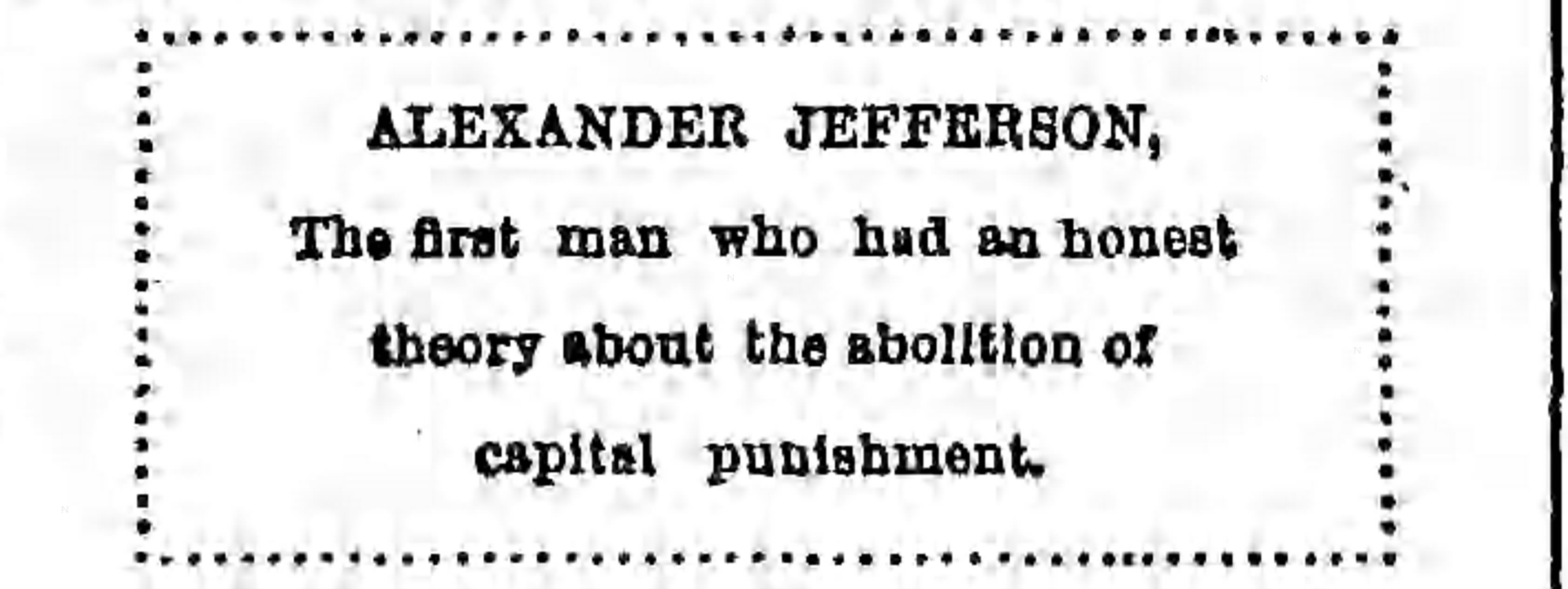
"I agree to that," said Jefferson,"I have agreed to have my brain examined, and I am willing that you and Miss Gilbert should do what you think best with my body."
The week before, the jail had a set of photographs made of Jefferson. He gave one each to George Elliott and Linda Gilbert. After months of avoiding the Jail, Celestial Jefferson came and joined his brother. Then, "After the others left, Celestial and Jefferson remained alone with the death watch".
Celestial did not stay for the execution. At 10:02 am, his brother was killed in a botched hanging. Alexander Jefferson strangled to death for eleven minutes in front of a crowd of around five hundred people.
Burial
At 4:45 pm on Saturday, August 2nd, 1884, Alexander Jefferson’s body was taken from cold storage and place in a cheap pine coffin for transport to a potter’s field, a burial ground for the indigent or unclaimed. Morgue Keeper Patrick Maguire commented, "Well, no matter what he did do, he has paid for it now, and I think it is a shame to let him be buried like a dog.” McGuire “got a sheet and covered the murderer's body with it and fixed his face upwards with a tender hand [...]" A bystander witnessing the wagon accelerate rapidly away uttered the poem:
"Rattle his bones over the stones
He's only a murderer,
Whom nobody owns."
Likely, the wagon carried him to the far reaches of Brooklyn on the border of Flatbush, to the medical complex where he had earlier received treatment for venereal disease. Between Winthrop street and Clarkson avenue, an almshouse, a hospital, an incurables hospital, and a lunatic asylum stretched east from the old Clove or Canarsie road, near what is now 34th street.2 The potter’s field lay in the five blocks between 45th street and Utica avenue. Trenches sixteen feet deep were filled with haphazardly stacked coffins, over which thin layers of dirt provided little protection from the noxious smell of decay.
The Eagle reported that Jefferson was buried with no mourners. "Not a single soul went to see the last of Jefferson, and none of his relatives or friends had offered to bury him. Neither Linda Gilbert nor Counsellor Elliott put in an appearance."
1 People of the State of New York against Alexander Jefferson (New York: Publisher not identified, 1883), p. 27.
2 FIMO Atlas of Kings County, New York 1890 SHEET: 29L
This blog post reflects the opinions of the author and does not necessarily represent the views of Brooklyn Public Library.
Post a Comment
While BPL encourages an open forum, posts and comments are moderated by library staff. BPL reserves the right, within its sole discretion, not to post and to remove submissions or comments that are unlawful or violate this policy. While comments will not be edited by BPL personnel, a comment may be deleted if it violates our comment policy.
eNews Signup
Get the latest updates from BPL and be the first to know about new programs, author talks, exciting events and opportunities to support your local library.