 As a children’s librarian, I spend a fair amount of time talking about seasons:
What’s your favorite season?
—Summer!
I like summer too. What do you like about summer? Is it cold in the summer?
—No, silly! The summer is hot. The winter is cold.
My favorite season is fall, but with fall come and gone for the year, we may as well welcome winter. And besides, there’s also a lot to love about our new weather: it gets cold, sure, but it can also be cozy; the snow can be inconvenient, but also very pretty. Perhaps it is precisely that contrast between severity and comfort that inspires writers writing for every age and across every genre, to try and capture the looks and feels of winter.
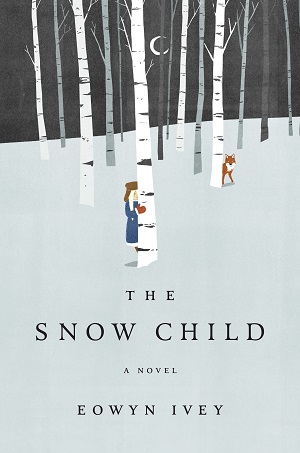
A few years ago I went through a period of reading books set in Alaska. The book that started me on this journey was Eowyn Ivey’s The Snow Child. Ivey, who was raised in Alaska, places the reader directly into a snowy 1920s landscape with passages like, “as the glow of the cabin windows turned to flickers through the trees and then to black, her eyes adjusted and the starlight alone on the pure white snow was enough to light her way” and “an owl swooped through the spruce boughs, a slow-flying shadow, but she was not frightened. She felt old and strong, like the mountains and the river.” And for readers more interested in exploring 19th Century Alaska, there's her second book, To the Bright Edge of the World. I also visited a very specific and very frozen world of alternate-history Sitka during this same period, via Michael Chabon’s The Yiddish Policemen’s Union, before ending my Alaskan journey with Dave Eggers’ Heroes of the Frontier. Each of these books evokes a very different version of Alaska, but they all have the cold in common.
Having lived in western Massachusetts for years, I’m almost certain there is nothing as simultaneously bleak and beautiful as a long New England winter. I’m just as certain that no writer has captured this bleakness and beauty as perfectly as Edith Wharton does in Ethan Frome. Wharton writes, "But at sunset the clouds gathered again, bringing an earlier night, and the snow began to fall straight and steadily from a sky without wind, in a soft universal diffusion more confusing than the gusts and eddies of the morning. It seemed to be a part of the thickening darkness, to be the winter night itself descending on us layer by layer." You don’t need to have lived in New England to imagine yourself inside that scene.
Back in New York City, a teenaged character remembers her first time building a snowman—a memory inextricable from the more challenging memory of her mother’s coming and going throughout her childhood, in Jacqueline Woodson’s If You Come Softly. “I ate my half of the Snickers bar slowly, thinking about the day Marion returned. It had snowed that morning—a heavy wet snow. My father helped me into my coat and hat and our neighbor came to take me to the park. When I got home, wet and cold and ready for my father to make me some hot chocolate, Marion was sitting there, at the kitchen table, her hands folded like a schoolgirl.” Snow, winter, and the seasons, all have a way of transporting characters, writers, and readers alike back and forth through different places and times in their lives.
I could hardly call myself a children’s librarian, let alone a children’s librarian working in Brooklyn, if I didn’t end with Ezra Jack Keats’ The Snowy Day and remind all readers that winter is an optimal time for reading together. So invite a nearby child to join you and follow Peter as he explores his neighborhood made new by the snow. Peter ends his adventure by making snowballs: “he picked up a handful of snow - and another, and still another. He packed it round and firm and put the snowball in his pocket for tomorrow. Then he went into his warm house.” Winter can look and feel many different ways, but there’s no feeling of winter quite like that of a snowball melting in your pocket signaling a return home.
This blog post reflects the opinions of the author and does not necessarily represent the views of Brooklyn Public Library.
Post a Comment
While BPL encourages an open forum, posts and comments are moderated by library staff. BPL reserves the right, within its sole discretion, not to post and to remove submissions or comments that are unlawful or violate this policy. While comments will not be edited by BPL personnel, a comment may be deleted if it violates our comment policy.
eNews Signup
Get the latest updates from BPL and be the first to know about new programs, author talks, exciting events and opportunities to support your local library.